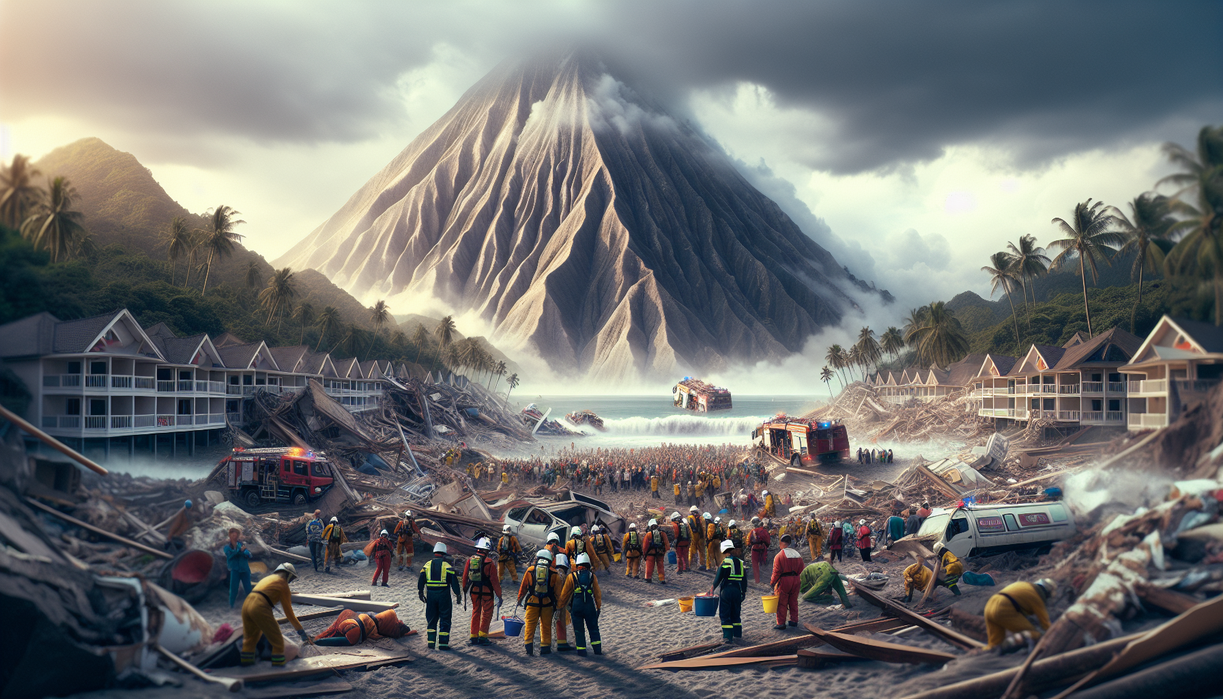
www.socioadvocacy.com – The recent tragedy at Mount Maunganui’s holiday park has forced New Zealand to confront an uncomfortable truth about the environment. While many fear earthquakes, tsunamis, or volcanic eruptions, statistics reveal another killer often overlooked. Landslides, triggered by weather, geology, and human activity, repeatedly claim lives with little warning. The Bay of Plenty disaster shows how fragile familiar places become when steep land, heavy rain, and built structures collide. Our environment is not a static backdrop; it is an active system, constantly adjusting to stress.
This event should not be seen as an isolated misfortune but as a signal about how we live with the landscape. New Zealand’s dramatic scenery attracts visitors, inspires art, and supports communities, yet it also hides latent instability. When the environment reaches a tipping point, soil and rock can move with terrifying speed. The Mount Maunganui slide highlights the cost of ignoring that risk, especially where holiday parks, roads, and homes nestle at the base of slopes.
New Zealand’s environment and its hidden dangers
New Zealand’s environment is shaped by powerful tectonic forces. Mountain ranges rise, coasts shift, rivers carve new paths. This constant reshaping produces beauty, but also instability. Steep hillsides, fractured rock, and deep weathered soils sit above towns, farms, and tourist hotspots. When intense rain or rapid groundwater changes arrive, those slopes can fail. People often underestimate this hazard because landslides do not always create spectacular images like erupting volcanoes or towering waves. Yet history shows they remain our deadliest hazard.
Statistics from past decades confirm numerous deaths linked to landslides, both large and small. Some events follow cyclones or slow-moving rainstorms that saturate hillsides for days. Others occur after road cuts, forestry, or building work alters slope stability. The Mount Maunganui tragedy is a recent example, but it fits a long pattern of environmental stress reaching a breaking point. Each case carries its own local story, though they share common themes of exposure, vulnerability, and limited preparedness.
Another reason landslides feel invisible lies in our relationship with the environment. Many people see steep cliffs or forested bluffs as scenic backdrops. They trust that if an area hosts homes or a holiday park, it must be safe. That assumption often fails. Hazard maps may be outdated, risk assessments unfinished, or warnings muted by economic pressure. The result is an illusion of security, reinforced by years or decades without incident. When the earth finally moves, the shock is immense, because everyday life has taught residents to ignore subtle signs of danger.
How climate and human choices raise landslide risk
Climate change adds another layer of pressure on an already restless environment. Warmer air holds more moisture, leading to heavier rain events. When storms linger or arrive back-to-back, slopes never fully dry. Pore water builds inside soils, reducing friction and weakening natural supports. What once coped with moderate rainfall now fails under new extremes. The Bay of Plenty region has experienced exactly such patterns. Each intense storm becomes both a weather story and a stress test for every hillside above houses and campsites.
Human decisions frequently amplify this natural vulnerability. Roads carved into slopes, drainage blocked by development, vegetation cleared for views or space, all alter how water moves and how soil behaves. A stable slope can become marginal once roots disappear or runoff concentrates in one channel. Short-term convenience competes with long-term safety. Environmentally sensitive planning requires patience, data, and sometimes the courage to say no to a project. Yet political cycles reward quick gains, not cautious restraint, so risk creeps upward almost unnoticed.
The Mount Maunganui holiday park setting illustrates this tension. Visitors expect relaxation close to nature, with dramatic scenery and easy access to attractions. That same proximity to steep ground creates exposure to landslides. My own perspective is that tourism and safety do not need to conflict, provided transparent risk communication occurs. People can accept some danger when informed honestly, much like backcountry hikers entering avalanche terrain. Problems arise when stakeholders underplay hazards for commercial or social comfort, leaving residents and visitors unprepared when the environment reacts.
Rethinking how we live with a restless environment
The tragedy near Mount Maunganui invites deeper reflection about resilience in a changing environment. Enhanced hazard mapping, regular slope monitoring, and strict planning rules near unstable ground must become routine, not optional. Communities should demand open access to risk information, even when it affects property values or cherished sites. Education about early warning signs—cracks, tilting trees, blocked drains—can empower residents to act before disaster strikes. Most importantly, New Zealand needs a cultural shift that sees the environment not as a fixed stage for human activity, but as a dynamic partner. Living safely on moving land requires humility, long-term thinking, and the willingness to adapt where we build, travel, and rest.