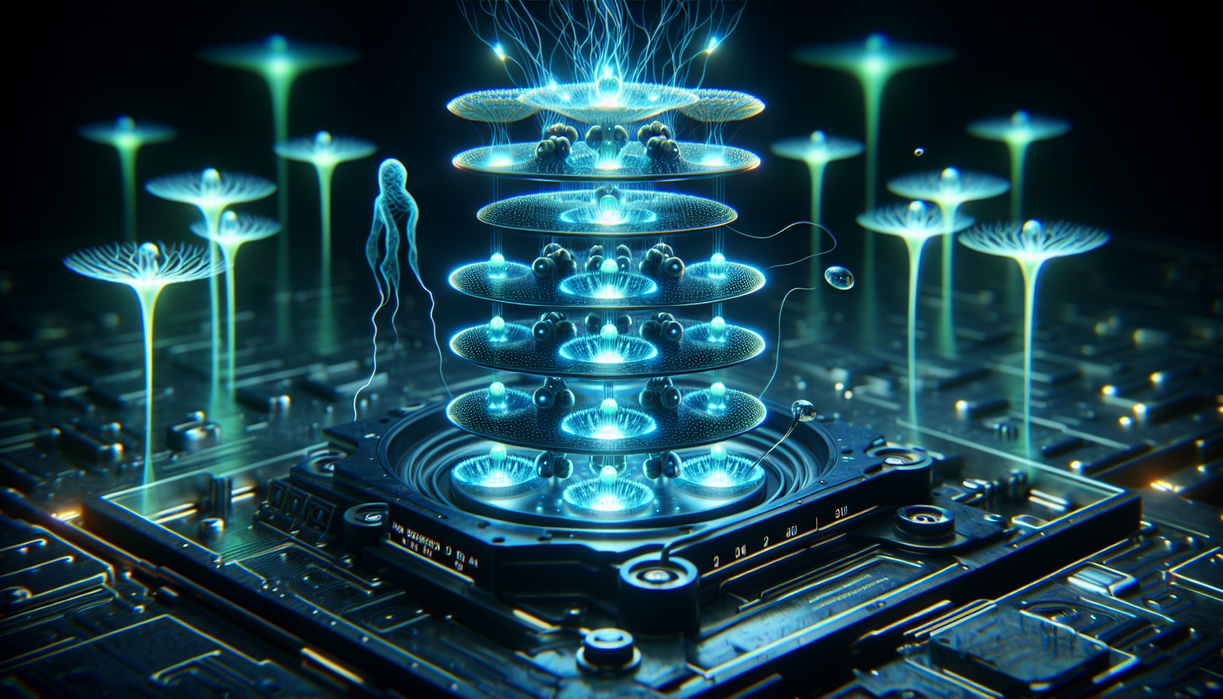
www.socioadvocacy.com – Energy & green tech is stepping into a fascinating new phase, guided not by circuits or silicon first, but by biology. Inspired by the natural powerhouses known as electric rays, researchers at UNIST have created stacked ionic cells able to deliver more than 100 volts for small electronics without any external power source.
This bio‑inspired breakthrough hints at a future where energy & green tech grows more independent, flexible, and sustainable. Instead of bulky batteries or constant charging, ultra‑thin ionic layers could quietly generate electricity wherever we place them. That shift could transform how we design wearables, medical implants, and low‑power sensors, blending nature’s clever tricks with human engineering.
How Electric Rays Rewired Energy & Green Tech
Electric rays use specialized cells, called electrocytes, to stun prey or defend themselves. These cells are stacked in series inside the fish, so each tiny voltage adds up to a powerful discharge. UNIST’s team borrowed this elegant biological blueprint, then re‑created it with carefully designed ionic materials suited for practical devices. Instead of muscles and nerves, their system relies on ion gradients, membranes, and clever chemistry to generate a steady voltage.
For energy & green tech, this approach offers something conventional batteries struggle with. The cells can be thin, flexible, and assembled like Lego bricks to reach higher voltages. Because the system mimics a living organism’s strategy, it can operate without complex moving parts or heavy metal components. That combination opens opportunities for electronics that feel almost organic, merged with clothing, skin, or soft robotics.
Even more striking, the stacked ionic cells reach over 100 volts while remaining compact. Many wearable gadgets require only modest power, but they demand reliability and safety close to the human body. These ray‑inspired cells promise both. By avoiding flammable electrolytes or rigid casings, they point to a safer route for powering next‑generation devices, especially where traditional lithium battery risks feel unacceptable.
Why Bio‑Inspired Power Matters for a Greener Future
Energy & green tech constantly seeks sources that are cleaner, safer, and easier to integrate into daily life. Stacked ionic cells align with that mission, since they can be built from relatively benign materials and designed to work quietly in the background. Instead of frequent charging from fossil‑fuel heavy grids, such systems might harvest chemical gradients or use slow, ambient processes to maintain a charge.
From an environmental perspective, lowering reliance on heavy metals, complex mining, and difficult‑to‑recycle packs is crucial. If large numbers of low‑power devices can switch to ionic stacks that imitate electric rays, the cumulative reduction in hazardous waste could be substantial. Energy & green tech then becomes not only efficient, but also more responsible throughout a product’s life cycle.
Personally, I see this as part of a broader shift away from brute‑force engineering toward design that respects natural principles. Nature has optimized energy flows over millions of years. When researchers translate those strategies into human technology, they often uncover solutions that are both resource‑light and robust. This ray‑inspired innovation illustrates how biological wisdom can reshape our entire concept of what a power source looks like.
From Lab Curiosity to Everyday Energy & Green Tech
Despite the promise, several hurdles still stand between this discovery and real‑world adoption. Materials must scale up affordably, long‑term stability needs careful testing, and integration with existing circuits requires standardization. Yet the core idea is too compelling to ignore: stacked ionic cells, modeled on electric rays, can provide meaningful voltage with minimal footprint and no external input. If researchers solve durability and manufacturing challenges, we might soon wear clothing that powers sensors, use medical patches energized by their own ionic layers, or deploy remote detectors that never need a battery swap. In that scenario, energy & green tech feels less like a separate infrastructure, more like a quiet companion woven directly into our environment—reminding us that the most sustainable innovations often begin by simply watching how life itself handles power.