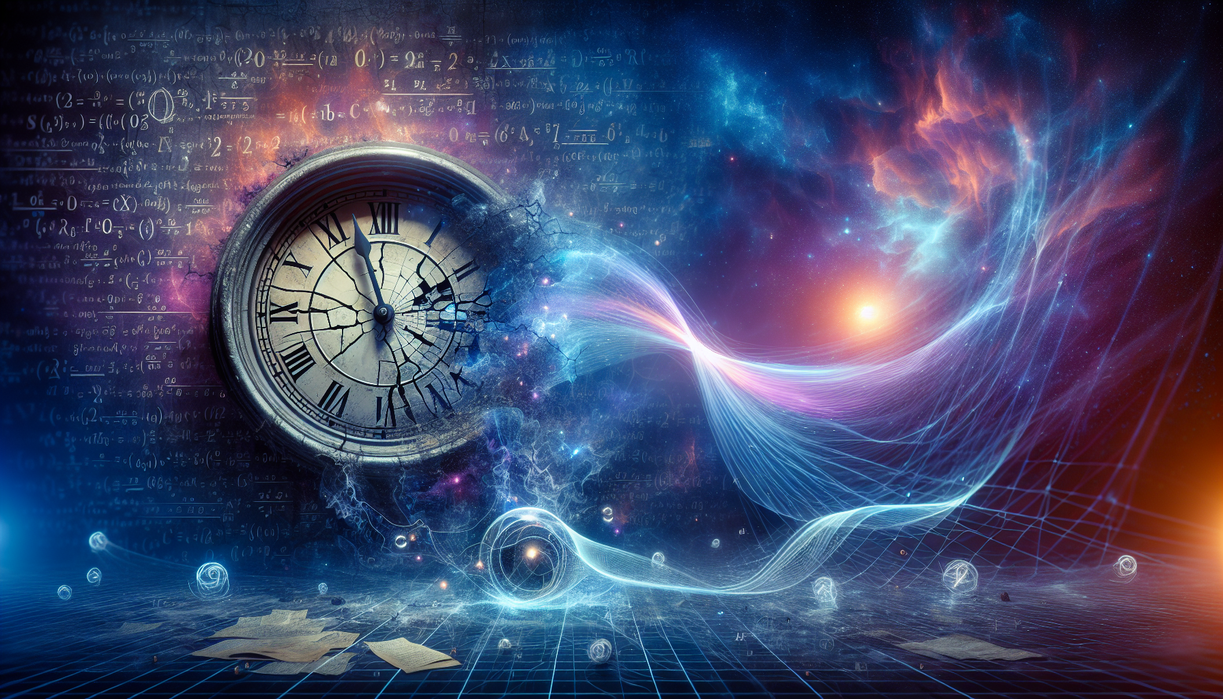
www.socioadvocacy.com – Astronomy has entered a new era where clocks, not cameras, may reveal the Universe’s deepest secrets. Instead of chasing faint light from distant galaxies, researchers now listen to the rhythmic beacons of pulsars, hoping tiny timing glitches will expose waves of dark matter sweeping across space. This fresh approach blends astrophysics, precision timing, and gravitational theory into a single ambitious experiment.
Although astronomy has mapped stars, nebulae, and galaxies in exquisite detail, most cosmic mass still hides from view. Dark matter neither glows nor blocks light, yet its gravity shapes galaxies and large-scale structure. By turning the Milky Way into a giant laboratory, scientists aim to test whether dark matter behaves as a smooth fluid, a mist of particles, or even a vast, oscillating field that ripples through space and time.
Astronomy’s Invisible Majority: The Dark Matter Puzzle
Modern astronomy suggests that visible stars, planets, and gas contribute only a modest share of the Universe’s mass. Galactic rotation curves, gravitational lensing, and the cosmic microwave background all point toward an unseen component known as dark matter. Without this hidden mass, galaxies would fly apart, clusters would not form as observed, and the web-like pattern of large-scale structure would look very different from current surveys.
Despite decades of effort, no laboratory experiment has conclusively identified the basic unit of dark matter. Popular candidates like WIMPs have faced mounting constraints from underground detectors and collider searches. Astronomy therefore plays a crucial complementary role, using the Universe itself as an instrument. By observing cosmic systems across multiple scales, researchers can narrow down viable theories and discard those that clash with data.
Many physicists now explore lighter, wave-like dark matter models, including axions and other ultralight fields. Unlike heavy particles that behave like discrete bullets, such fields resemble continuous waves with large coherence lengths. Astronomy becomes essential here, since terrestrial detectors often lack the spatial reach to sense these extended phenomena. Pulsars, with their clock-like regularity, offer a promising way to track such waves as they wash across the Galaxy.
Why Pulsars Are Exceptional Tools for Astronomy
Pulsars are rapidly spinning neutron stars that emit beams of radiation from their magnetic poles. As they rotate, these beams sweep past Earth like lighthouse beams, producing highly regular flashes detected by radio telescopes. In astronomy, some millisecond pulsars rival atomic clocks in stability, with pulse arrival times predicted to microsecond precision over many years. This extreme reliability turns them into natural probes of spacetime changes.
Any disturbance along the line of sight between a pulsar and Earth can alter the arrival time of its pulses. Gravitational waves, changes in the interstellar medium, or even instrumental errors can introduce minuscule shifts. By monitoring many pulsars scattered across the sky, astronomers build a pulsar timing array. Correlated timing deviations across this network can reveal large-scale phenomena that would remain invisible through conventional imaging.
For dark matter research, the idea is simple in concept but challenging in execution. If dark matter behaves as a wave-like field, its oscillations might cause subtle variations in fundamental quantities or in the gravitational potential. These variations could nudge pulsar clocks slightly ahead or behind schedule. Astronomy teams then search the timing data for characteristic patterns, such as periodic modulations or coherent shifts that match predictions from specific dark matter models.
Listening for Dark Matter Waves with Galactic Clocks
In current experiments, astronomy collaborations gather years of precision timing data from dozens of millisecond pulsars. Sophisticated algorithms compare observed pulse arrival times against detailed timing models that account for known influences like Earth’s motion, pulsar spin-down, and interstellar dispersion. Any residual patterns might point toward new physics. For wave-like dark matter, researchers expect timing fluctuations that vary with frequency, sky position, or time in ways constrained by theory. Personally, I find this strategy elegant because it turns apparent noise into signal: once we understand all conventional effects, whatever remains could be the footprint of the invisible. Although no definitive detection has emerged yet, each improvement in sensitivity trims the viable parameter space, quietly guiding astronomy toward a clearer picture of what dark matter can and cannot be.
Pulsar Timing Arrays as Cosmic Interferometers
One powerful aspect of pulsar timing arrays is their distributed nature. Instead of two mirrors on Earth, the interferometer arms stretch across thousands of light-years. Each pulsar, Earth, and the intervening space form a baseline. When a dark matter wave passes through these regions, it may shift the relative phases of pulsar signals. Astronomy then turns timing residuals into a map of distortions imprinted on spacetime or on underlying fields.
This approach resembles gravitational-wave astronomy, yet the targets can differ. Gravitational waves produce characteristic quadrupolar patterns in timing correlations. Dark matter waves, in contrast, might generate alternative angular signatures or spectral features. By comparing the statistical fingerprints of these possibilities, researchers can discriminate between them. That ability to separate overlapping influences is crucial, since pulsar timing arrays already report evidence for a gravitational-wave background from supermassive black hole binaries.
From my perspective, the most exciting element is the dual use of the same data set. Astronomy teams collect pulses primarily to study gravitational waves, pulsar physics, and Galactic structure. Yet those observations double as a sensitive monitor for dark matter effects. This efficiency reflects a broader trend in modern astrophysics: multi-purpose experiments that deliver high scientific return. Even null results are valuable, as they exclude entire classes of dark matter candidates with minimal additional cost.
What Dark Matter Waves Might Reveal About Physics
If pulsar timing arrays ever catch a clear signature of dark matter waves, the implications for astronomy and fundamental physics would be immense. Ultralight dark matter could hint at new symmetries, hidden sectors, or connections to early Universe processes such as inflation. The mass of the dark matter field, inferred from oscillation frequencies, would immediately constrain theory space. Coupling strengths to ordinary matter or to gravity would also become quantifiable through timing amplitudes.
An intriguing possibility involves scalar fields that subtly modulate constants we usually treat as fixed, like particle masses or the strength of forces. As such a field oscillates, it might cause minute changes in how quickly pulsars spin or in how signals propagate. Astronomy can test these ideas without physically manipulating the field; it simply observes the cosmos performing the experiment naturally. This passive observational style is a hallmark of astrophysical science, yet here it closely rivals laboratory precision.
From a personal standpoint, I see this as a quiet revolution. Instead of building larger colliders alone, we also learn to interrogate the sky with ever finer temporal resolution. Astronomy broadens its identity from picture-taking to time-keeping at galactic scales. The Universe becomes not just a distant spectacle but an active component of precision measurement. Whether the outcome confirms a specific dark matter model or merely tightens constraints, the exercise deepens our understanding of how cosmic structures and fundamental laws intertwine.
Challenges, Caveats, and the Road Ahead
Pursuing dark matter waves through pulsar timing remains a difficult enterprise, with many potential pitfalls. Observers must control instrumental systematics, model interstellar plasma variations, and track subtle rotational irregularities from the pulsars themselves. Any unmodeled effect could masquerade as new physics. Furthermore, theoretical expectations still span a wide parameter space, so non-detections do not immediately falsify dark matter waves; they only push viable models into narrower corners. Even so, I believe the persistence of these efforts reflects a healthy scientific culture in astronomy: one that values long-term monitoring, open data, and cross-disciplinary collaboration. In the end, the search itself reshapes how we think about the cosmos, reminding us that silence in the data can be as instructive as a loud signal, and that patience is often the most powerful tool when listening for the faint rhythms of an unseen Universe.