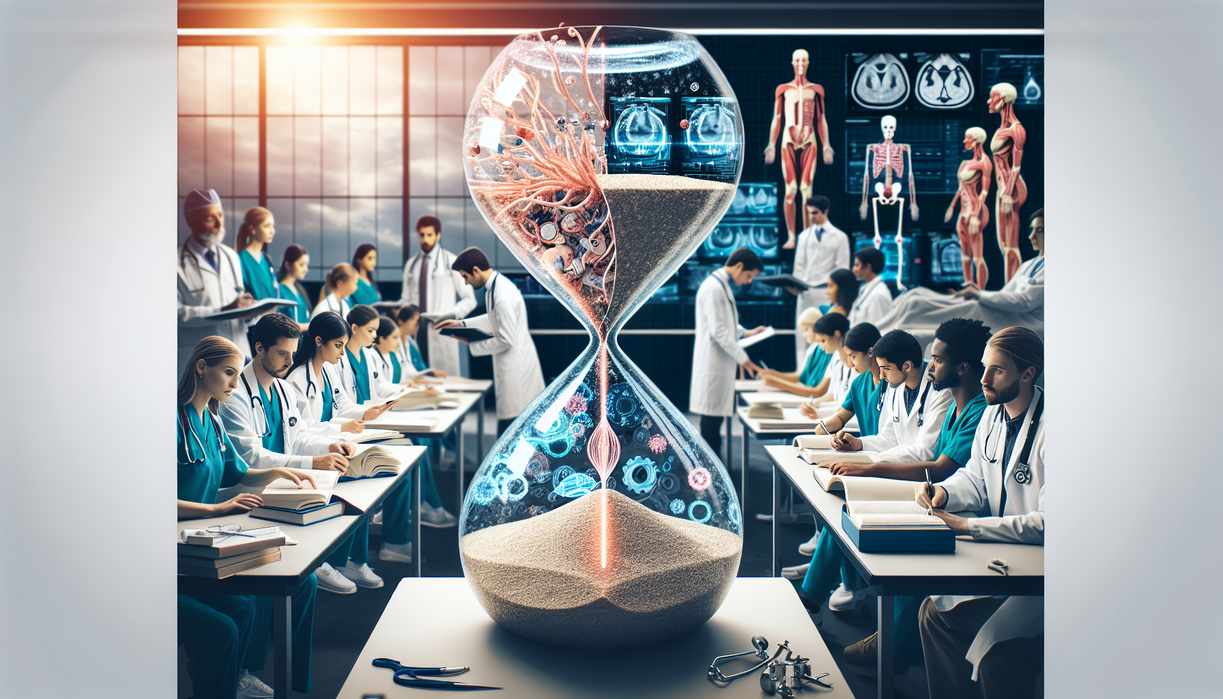
www.socioadvocacy.com – In recent ai news, a lively conference at the University of Miami raised a hard question for medical educators: When should future doctors start using artificial intelligence in their training? Many experts are excited about AI’s power, yet others worry that early exposure may weaken core clinical thinking. The debate has grown sharper after a striking report from Poland. There, endoscopists who leaned on AI support for only three weeks saw their manual skills and pattern recognition slide once the system was switched off.
This clash between promise and risk sits at the heart of current ai news in healthcare education. AI can scan images faster than humans, highlight hidden lesions, and suggest diagnoses in seconds. Still, medicine is not just about spotting shapes on a screen. It requires judgment under pressure, sensitive communication, and the ability to adapt when tools fail. If trainees outsource too much, too soon, they may never fully build those abilities. That tension shapes how academic leaders now rethink the future of medical training.
AI News from Miami: Hype, Hope, and Hard Lessons
The University of Miami gathering echoed a larger pattern across ai news this year. Schools face pressure to show they are modern and tech‑savvy. Students arrive expecting AI tools for note‑taking, exam prep, and clinical simulation. Hospitals, meanwhile, invest heavily in decision support software. Against this backdrop, resisting AI can feel outdated. Yet the Polish endoscopy findings cut through the buzz. Skill decay appeared fast, not over years but within weeks of heavy reliance on automated help.
At the conference, speakers argued that medical training has always flirted with technology. Ultrasound, robotic surgery, and electronic records all changed how clinicians learn. However AI poses a different challenge. It does not only display information. It interprets it, ranks it, and often suggests a single best answer. That dynamic encourages passivity. A trainee may stop asking, “What else could this be?” Instead they might lean on the AI’s confidence score, even when their own instincts disagree.
For me, the most troubling element in this ai news story is not just fading technical skills. It is the erosion of diagnostic curiosity. When students see AI as an oracle, they practice less mental flexibility. Over time, this habit can blunt intuition, which is built from thousands of small reasoning steps, many of them never written down. Once that process weakens, it becomes harder to notice subtle contradictions in a case or to challenge a misleading algorithmic suggestion.
Designing Medical Training in the Age of AI
So how should educators respond to this wave of ai news without swinging between panic and blind enthusiasm? One emerging view at Miami was staged exposure. Early in medical school, trainees might work primarily with traditional methods. They learn history‑taking, physical examination, and basic interpretation of labs or imaging by hand. AI stays mostly in the background. Later, once these foundations feel solid, AI tools enter as supplements, not replacements. This sequence protects fundamental skills while still preparing students for tech‑rich workplaces.
Another approach involves deliberate “AI‑off” drills. Inspired by the Polish experience, some experts proposed scheduled sessions where all algorithmic aids remain disabled. During those sessions, students must perform procedures, interpret scans, or build differential diagnoses entirely on their own. Afterward, they compare their reasoning with AI suggestions. This structure turns technology into a training partner rather than a quiet puppeteer. Educators can then trace exactly where AI helped, where it distracted, and how it shaped confidence.
Assessment also needs to evolve along with this ai news trend. If exams only measure accuracy while AI runs in the background, trainees may pass with weak independent skills. Instead, schools could introduce dual assessments. One evaluates performance with AI support, reflecting real‑world practice. The other tests performance without AI, revealing underlying competence. A large gap between the two scores would signal over‑reliance. That kind of data would help faculty intervene early rather than discovering deficits after graduation.
My Take: AI Should Sharpen, Not Soften, Clinical Minds
Reading this ai news, I see AI as neither savior nor villain. It is a powerful amplifier. If educators design programs carelessly, AI will amplify laziness, shallow thinking, and fragile skills, just as the Polish endoscopy story suggests. But with intentional structure, AI can become a demanding tutor that pushes learners to justify every choice. The key lies in transparency and friction. Trainees should be required to explain why they agree or disagree with an algorithm, to articulate alternative diagnoses, and to practice regularly without digital assistance. When used this way, AI will not replace the clinician’s mind; it will pressure that mind to grow sharper. The future of medical education depends on this careful balance, and the decisions made today will echo in clinics and operating rooms for decades.