www.socioadvocacy.com – A 5,000-year-old megastructure in southern Spain has just rewritten its own story. Long buried under layers of soil, stone, and later civilizations, this prehistoric monument has revealed evidence that people kept returning to it thousands of years after its creators vanished. Far from being a forgotten ruin, the megastructure appears to have remained a powerful landmark for generation after generation.
This discovery challenges a familiar idea: that ancient sites have one main era of use and then fade into silence. Instead, the Spanish megastructure shows how a single place can acquire new meanings over immense spans of time. By opening its sealed interior, archaeologists have exposed not only old stones, but a long dialogue between distant ages.
A Megastructure Buried Under Time
The megastructure lies in southern Spain, within a region already rich in prehistoric monuments. From above, the site resembles a vast architectural puzzle: earthen mounds, stone corridors, circular features, and carefully arranged alignments. Radiocarbon data indicates that the main construction phase began roughly 5,000 years ago, during the Copper Age. At that time, communities across Iberia experimented with large ritual landscapes, creating tombs, enclosures, and standing stones on a monumental scale.
Excavations show that this megastructure was far more complex than a simple tomb or single-purpose building. It includes long passages, chambers, and exterior features that frame the surrounding horizon. Many architectural choices appear deliberate, perhaps linked to sunrise positions or seasonal cycles. Even in its earliest phase, the monument combined engineering skill with a sophisticated vision of space, community, and the cosmos.
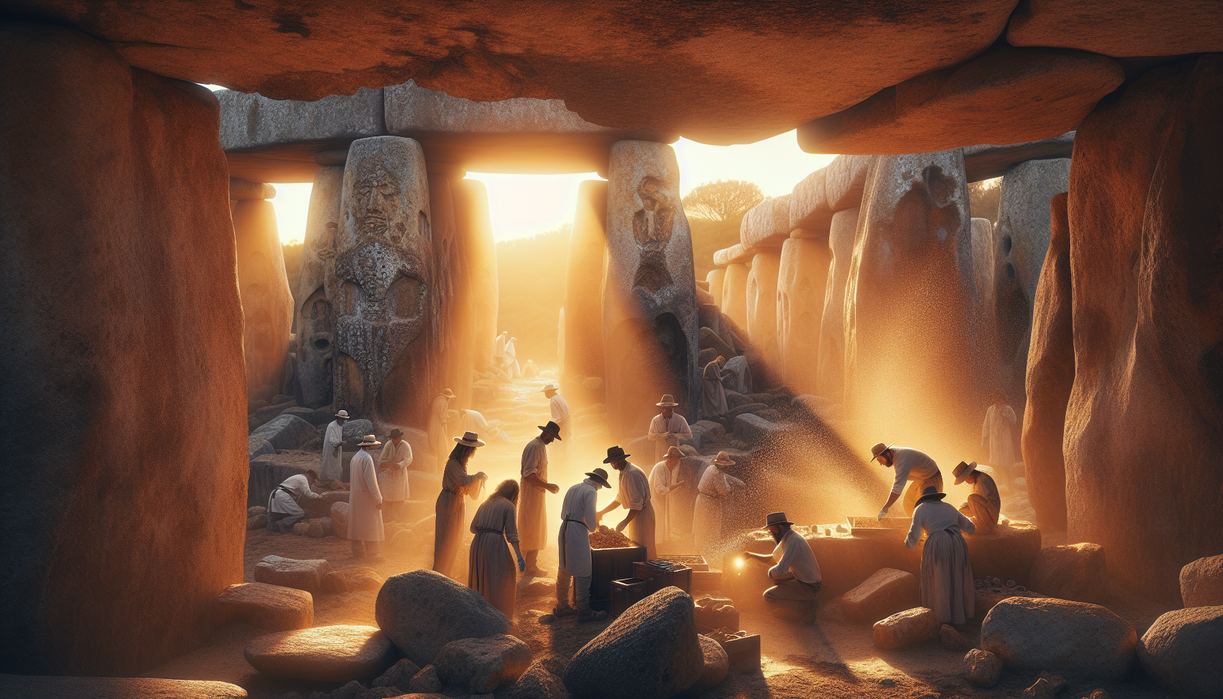
When archaeologists finally opened sections that had remained sealed for millennia, they expected to encounter untouched prehistoric deposits. Instead, they uncovered traces of reuse. Later communities had entered, modified, and even honored the structure. Ceramics, tools, and altered surfaces show that the megastructure evolved across time rather than freezing at its birth. This extended biography makes it less a static building and more a living participant in regional history.
Evidence of Return Visits Across Millennia
Inside the megastructure, researchers found artifacts from periods long after the original builders. Items from the Bronze Age, Iron Age, and even later episodes indicate repeated return visits. Some finds suggest ritual behavior, such as intentional deposits near walls or thresholds. Other layers look more like everyday activity, perhaps temporary shelter or gatherings near a familiar landmark. Whatever the exact motivations, the message is clear: people knew about this huge structure centuries after its original purpose had faded.
Architectural modifications provide further evidence for long-term engagement. Certain passages were blocked, while others were opened. New surfaces were laid over older floors. In some sectors, stones were robbed from early walls, then reused in fresh constructions nearby. These choices show that later visitors did not treat the megastructure as a fragile relic. Instead, they interacted with it, altered it, and folded it into their own world. The monument became a resource as well as a memory.
From my perspective, this layered pattern of reuse reveals how communities negotiate heritage without written records. The megastructure connected distant generations through stone, soil, and shared geography. Each new group interpreted the old monument through its own beliefs, yet still felt drawn to the same imposing place. It reminds us that meaning is never fixed; it is constantly rebuilt, just like the chambers and corridors that kept changing over time.
What This Megastructure Tells Us About Our Future
This Spanish megastructure invites us to rethink how human societies relate to monumental architecture. When we build grand projects today, from skyscrapers to dams to orbital infrastructure, we rarely imagine how they will function in five thousand years. Yet this site shows that large constructions can outlive languages, religions, and nations, while still shaping the lives of distant descendants. As climate pressures and cultural shifts accelerate, we may need to design with this deeper horizon in mind. The megastructure stands as a stone archive of resilience and reinvention, a reminder that places can gain new purposes as old ones fade. In reflecting on its story, we glimpse our own: a species that keeps returning to powerful landmarks, searching for continuity amid constant change.