www.socioadvocacy.com – Wildfires grow faster than human crews can often move, turning quiet hillsides into walls of flame in minutes. As summers stretch longer and forests dry out, many communities now face smoke-filled skies as a seasonal reality instead of a rare disaster. That pressure has pushed researchers, students, and firefighters to search for tools capable of acting at the very first spark.
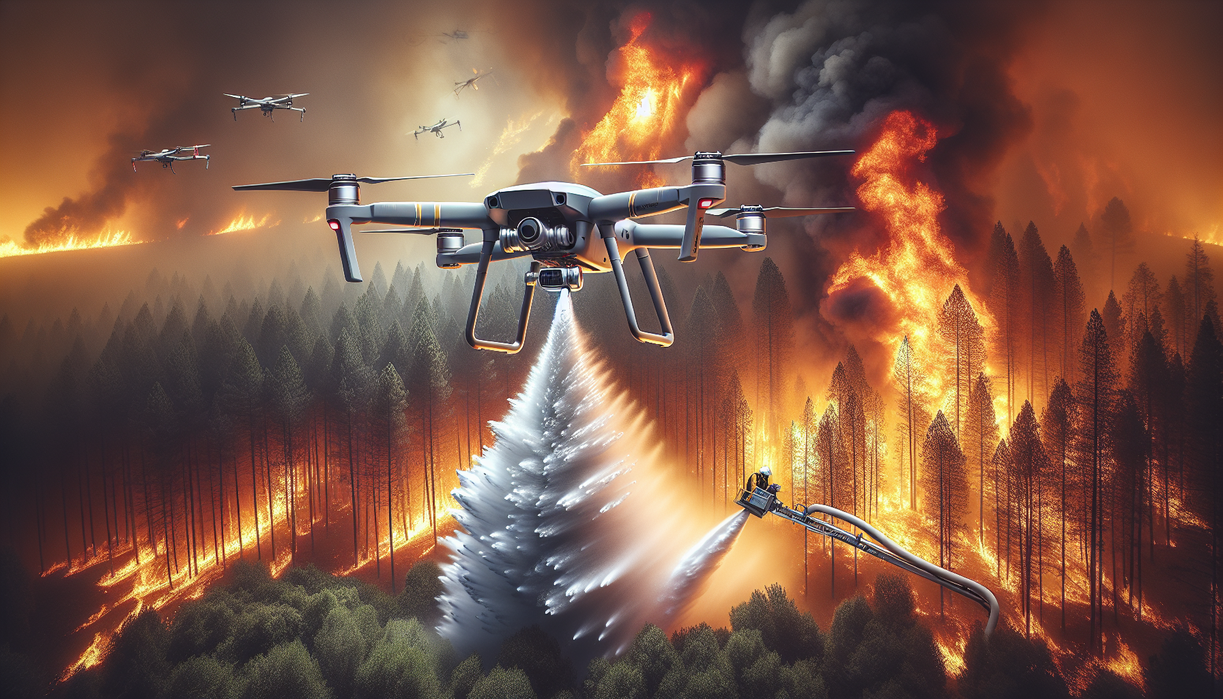
One of the most promising ideas rises on four spinning rotors. Across universities and tech labs, teams are training autonomous drones to detect small brushfires, then drop pinpoint water or fire retardant before flames gain momentum. These experiments may look like high-tech games, yet they hint at a future where swarms of nimble aircraft slow or even stop wildfires before sirens sound.
Students Put Firefighting Drones To The Test
On a dusty test range far from city streets, student-built drones launch from makeshift pads, climbing over controlled brushfires. Each aircraft carries sensors tuned to spot heat, smoke, and color changes on the ground below. Instead of flying simple GPS paths, they constantly adjust course as new data flows through onboard computers. The goal is simple to say, yet hard to achieve: see the fire early, classify its behavior, then react before flames leap outward.
Competitions shaped around these tasks feel part robotics contest, part real-world emergency drill. Teams must prove their drones can navigate wind gusts, read thermal patterns, and deliver small water payloads onto targets no bigger than an outdoor grill. Judges track speed and accuracy, also reliability over repeated flights. Every success suggests real potential for future firefighting missions, while every misstep reveals gaps that still need careful engineering.
What makes these tests compelling is the mix of disciplines on display. Students from computer science, aerospace engineering, environmental science, and public safety collaborate on each platform. Some focus on flight stability, others on detection algorithms or payload design. That cross-pollination mirrors real wildfire response, where no single specialty can handle everything. The field trials become a living classroom for modern disaster technology.
Why Speed Matters For Containing Wildfires
Once wildfires escape early stages, their heat creates wind, pulls in fresh oxygen, and throws burning embers far ahead. Human crews must pause to assess safety, coordinate vehicles, then secure access roads. Aircraft such as helicopters or tankers deliver huge amounts of water or retardant, yet need pilots, maintenance teams, and often long trips from distant bases. Every minute between first spark and first drop grants the fire more power.
Drones offer a different timeline. A network of small autonomous craft could sit on towers, station roofs, or mobile trailers near high-risk zones. As soon as sensors or satellite alerts flag unusual heat, they lift off without waiting for pilots or long briefings. Even if each drone carries only a modest payload, rapid arrival can slow flame fronts or at least map their progress. That early response buys critical time for firefighters heading toward the scene.
Speed also matters for information. Traditional reports from callers often sound vague or outdated by the time crews arrive. Lightweight drones equipped with cameras and thermal imagers can stream live data straight to command centers. Incident leaders gain a clear view of flame length, direction, and nearby homes. Accurate maps support better decisions, so crews avoid guesswork while confronting shifting smoke and heat.
From Detection To Precision Water Drops
Spotting wildfires early poses one challenge; hitting them precisely from the air adds another layer of complexity. Student teams experiment with different payload systems, from simple gravity-release cups to smart pods that adjust when they open. Each design must consider aircraft weight limits, stability during flight, and the ideal droplet size for cooling brush before flames surge upward. A clumsy drop can miss the core of the burn or scatter water so widely that impact fades.
To tackle this problem, some groups simulate fires on computer models, then compare optimal drop paths with results from field trials. Others borrow ideas from agriculture drones that already spray fields with fertilizer or pesticides along exact lines. Over time, algorithms learn how to correct for wind, altitude, and motion, steering payloads toward the hottest zones. The most successful designs deliver several quick, targeted drops rather than one heavy splash.
Even small payloads matter during the earliest moments of a wildfire’s life. A drone might extinguish a single burning bush, stop embers from reaching dry grass, or create a slightly cooler zone that slows spread. These localized effects resemble a paramedic stabilizing a patient until surgeons arrive. Drones are unlikely to replace helicopters or heavy air tankers, yet they could fill a vital niche: the first ten minutes when fires still remain manageable.
AI, Autonomy, And The Future Of Fire Response
Modern drone firefighting hinges on artificial intelligence. Onboard processors must distinguish harmless campfire smoke from a threatening brushfire, while also separating sun reflections from genuine heat signatures. Machine learning models train on vast collections of thermal images, smoke plumes, and terrain maps. As datasets grow, detection improves, reducing costly false alarms. Reliable autonomy becomes essential once fleets scale into dozens or hundreds of drones across large regions.
Beyond detection, AI guides real-time decision making. A single drone may need to choose between continuing a mapping run or spending its remaining water on a flare-up near homes. Larger networks could coordinate coverage: some craft mapping perimeters, others focused on suppression, with fresh units launching as batteries run low. This resembles air traffic management mixed with battlefield logistics, only now software handles most coordination. Human supervisors set goals and intervene when anomalies appear.
Ethical questions follow this technological leap. Who bears responsibility if autonomous drones misjudge a situation and someone gets hurt? How do agencies balance privacy concerns when aircraft constantly watch rural landscapes for signs of smoke? My view leans toward transparent oversight, clear rules on data retention, and public involvement in policy design. Communities affected most by wildfires deserve a strong voice as AI-driven systems patrol their skies.
Barriers Between Prototypes And Real Wildfires
Despite promising trials, moving from student competitions to real incident scenes requires many hurdles cleared. Regulatory frameworks must adapt to fleets flying beyond visual line of sight, sometimes at night, near crewed aircraft. Authorities need assurance that autonomy will not conflict with helicopters dropping large loads or with evacuation traffic below. Certification for hardware and software also takes time, especially for systems expected to operate under extreme heat and smoke.
Costs present another obstacle. Rural fire districts often struggle to fund basic gear, so fleets of advanced drones might feel out of reach. Creative partnerships between universities, startups, and public agencies can ease this gap. Shared regional fleets or subscription-style services could provide access without each town buying full systems. Over time, as production scales up and components become standardized, prices should drop, similar to earlier waves of consumer drone adoption.
Cultural factors matter too. Veteran firefighters sometimes meet new gadgets with cautious skepticism, shaped by years of hard-earned experience on the fireline. The most successful programs rarely push drones as replacements for crews. Instead, they frame them as tools that keep people safer and more informed. Demonstrations during training exercises, along with clear evidence of saved time or reduced risk, help build trust. Technology must serve firefighters, not overshadow their expertise.
My Take: A Shared Sky For Humans And Robots
From my perspective, the most compelling aspect of drone-based wildfire response lies less in the gadgets, more in the shift toward proactive thinking. Rather than waiting for flames to tower over treetops, agencies can monitor vulnerable landscapes and move first. Drones act like scouts and medics for the fireline, reducing dangerous guesswork for human crews who still shoulder the toughest tasks. That partnership feels more sustainable than hoping for ever-bigger aircraft alone.
I also see these student competitions as incubators for a new generation of problem solvers comfortable mixing robotics, ecology, and public safety. Their prototypes will evolve, fail, improve, then inspire commercial systems years later. Many of the ideas tested on small brushfires today could, with refinement, help protect entire towns tomorrow. Watching these projects grow offers a rare source of optimism during a worrying era of hotter summers and longer fire seasons.
Still, enthusiasm should not drown out caution. Wildfires operate on scales of complexity that no software fully captures. Overconfidence in automation risks tragic mistakes, especially when lives and homes lie downwind. A wise path forward pairs relentless innovation with humility, continuous field testing, and deep collaboration with firefighters on the ground. The shared goal remains simple, even as tools grow sophisticated: fewer communities under orange skies, fewer nights wondering if the wind will turn.
A Future Written In Smoke, Water, And Code
As climate trends push wildfires into headlines year after year, drones will not emerge as a silver bullet, yet they can become vital threads in a broader safety net. Networks of vigilant eyes in the sky, carrying small but timely drops of water and streams of real-time data, can tilt odds away from catastrophe. The students guiding these experimental aircraft over controlled burns are, in a sense, rehearsing for crises we all hope never arrive. Their work invites us to imagine a future where technology does not simply document disaster; it moves quietly and quickly to prevent the worst outcomes before flames define the landscape.