www.socioadvocacy.com – When fire or flood hits, the environment around you can turn lethal in minutes. Many people imagine their home as the most dangerous place, yet the real threat often appears the moment they step into a car and head for the road. Late evacuations transform familiar streets into chaotic escape routes, where smoke, rising water, panic, and confusion combine into a deadly mix.
Recent videos from disasters worldwide show vehicles floating like toys in brown torrents, or trapped on highways with firestorms roaring on both sides. These scenes illustrate a harsh truth about our changing environment: hesitation costs time, and time costs lives. Choosing to leave early is not panic; it is a rational response to an increasingly unstable climate environment.
Why The Environment Turns Deadly On The Road
In a severe bushfire, the environment around a road can change faster than any driver can react. Wind shifts send flames across asphalt in seconds. Thick smoke blinds drivers, hides fallen trees, and conceals other vehicles. What looked like a clear escape route moments earlier can become a tunnel of fire, embers, and debris. Inside a car, people feel protected by metal and glass, yet those thin layers fail quickly against extreme heat.
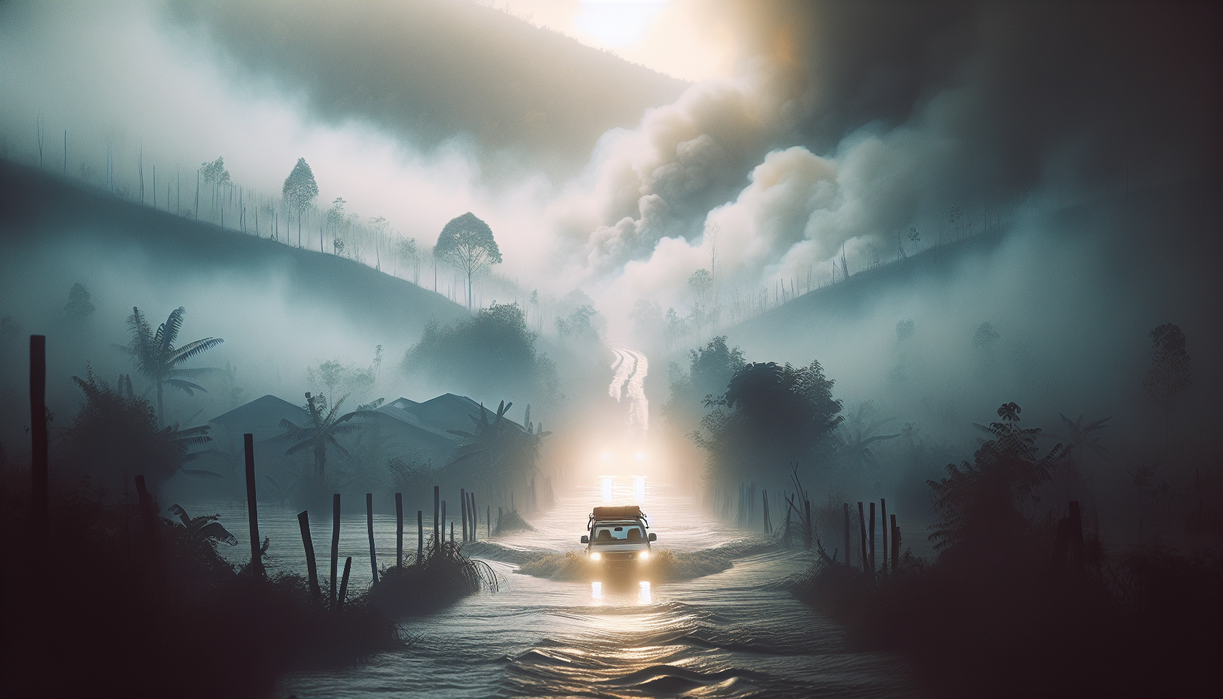
Floods create a different but equally lethal environment. Water does not need to be deep to sweep away a vehicle; a fast current can move even a heavy car. Road surfaces erode beneath the water, leaving hidden sinkholes. Drains overflow, bridges weaken, and familiar landmarks vanish under muddy waves. Drivers may enter water that appears shallow, only to discover a collapsed road or a submerged barrier too late to turn around.
What makes this environment so treacherous is the illusion of control. A steering wheel and accelerator foster confidence, yet physics does not negotiate. Tyres lose grip on slick ash or algae. Engines stall when water enters intakes. Doors jam under pressure from floodwater. Once a vehicle loses traction or catches fire, escape becomes a race against seconds. This is why experts insist: the safest trip in such an environment is the one you never need to take, because you left before danger arrived.
The Psychology Of Waiting Too Long
Even when the environment clearly deteriorates, many people still delay evacuation. Psychologists call this normalcy bias: the tendency to believe tomorrow will resemble yesterday. If past warnings felt exaggerated, residents may assume this time will be similar. They clean gutters, wet roofs, move valuables higher, and convince themselves those actions will be enough. Leaving feels like admitting defeat, especially for people attached to homes, pets, or property.
Another powerful force is social influence. When neighbours stay, staying feels reasonable. When others say, “We will see how it goes,” that attitude spreads through the community. On social media, mixed messages increase confusion. One post says the environment is critical, another claims authorities overreact. In this noise, people search for reassurance instead of risk, then cling to the most comforting narrative. By the time fear finally outweighs doubt, the window for a safe exit has shrunk.
From my perspective, the most dangerous myth is “We will leave if it gets bad.” By the time it looks truly bad from the driveway, the wider environment might already be catastrophic. Firefighters cannot guarantee an escort through burning corridors. Emergency crews cannot rescue every car from surging water. The modern climate environment moves faster than old habits. Preparation must now include a personal rule: leave earlier than feels comfortable, not later than feels necessary.
How To Decide When To Leave In A Changing Environment
Clear triggers help bypass hesitation when the environment begins to deteriorate. Before any season of bushfires or heavy rain, residents can set practical rules: leave once a fire danger rating reaches extreme for your region, or when a watch-and-act alert appears, instead of waiting for an emergency warning. For floods, treat predicted major flooding on local rivers as a signal to move early, particularly in low-lying suburbs. Prepare a go-bag with essentials, store important documents in one place, plan two different routes to safer ground, and identify friends, family, or community centres outside high-risk zones. Practicing the route on a calm day familiarizes you with the environment, so you are not exploring while under pressure. In a warming climate environment where events escalate faster than forecasts often suggest, early decision-making is an act of respect for both life and landscape.
The Wider Environment: Climate, Risk, And Responsibility
Behind each terrifying video of cars surrounded by fire or water sits a larger environmental story. A hotter climate dries vegetation for longer periods, turning forests, grasslands, and even suburban gardens into extended fuel loads. Heatwaves last longer, nights cool less, and fire seasons overlap across regions. When conditions align, the environment reaches a tipping point where a small spark produces an uncontrollable blaze that spreads faster than historic models predicted.
Similarly, a warmer atmosphere holds more moisture, which increases the intensity of heavy rainfall events. Rivers rise more quickly, urban drains overflow, and flash floods form with little warning. Paved surfaces, stripped of vegetation, reduce the land’s ability to soak up water. The built environment, with its roads, car parks, and roofs, speeds runoff into creeks and stormwater systems that were never designed for such volumes.
This evolving environment demands new attitudes to personal and collective responsibility. It is no longer adequate to treat each fire or flood as a rare freak event. Instead, communities must think of these crises as recurring features of life in a transformed climate environment. Early evacuation then becomes both a safety strategy and a civic contribution. Leaving roads clear enables emergency crews to move freely, reduces the number of rescues required, and helps the whole community recover faster.
Reimagining Safety In A Volatile Environment
Many traditional safety messages focused on defending property. People were encouraged to clear gutters, install sprinklers, or stack sandbags. These actions still matter, yet they must now sit beneath a higher priority: preserving life within a volatile environment. Buildings can be rebuilt; families cannot. Once that principle becomes central, decisions around evacuation lose much of their emotional conflict.
From my viewpoint, communities need to reimagine what it means to be “prepared.” Prepared does not mean waiting stoically while flames advance along a ridge or water climbs each step of a staircase. Prepared means knowing your local environment, understanding its specific hazards, and having a realistic exit plan before trouble appears. It also involves talking with neighbours, sharing routes, agreeing on check-in methods, and identifying vulnerable residents who might require extra help.
Technology offers useful tools, yet it also introduces false reassurance. Weather apps, webcams, and social feeds can create a sense that we see the full environment, when in fact we only see fragments. Signal loss during disasters remains common. Power can fail. Towers can fall. True resilience arises not from perfect information, but from conservative choices made early, guided by respect for the environment’s unpredictability rather than faith in last-minute data.
A Reflective Conclusion On Living With A Fierce Environment
As fires roar through forests or floods swallow streets, it becomes painfully clear that humans do not control the environment; we coexist with forces far larger than ourselves. The recurring images of cars trapped on burning roads or sinking at flooded intersections are not just scenes of misfortune; they are warnings etched in smoke and water. Leaving early honors those warnings. It admits that a rapidly changing climate environment no longer allows comfortable delays or heroic last stands over property. Instead, survival rests on humility, foresight, and solidarity. By choosing to act before danger closes in, we protect not only our own lives but also emergency responders and neighbours. In that choice, we begin to build a culture suited to an environment that will only grow more intense in the years ahead.