www.socioadvocacy.com – Proteostasis has become a central concept for next‑generation therapies targeting neurodegeneration. A new experimental candidate, NUZ‑001, is drawing attention because preclinical results suggest it reinforces multiple cellular routes for clearing toxic proteins. Rather than focusing on a single enzyme or pathway, this approach attempts to stabilize the entire protein quality network, with the goal of protecting vulnerable neurons from slow, cumulative damage.
These early insights into NUZ‑001 hint at a strategy that could reshape how researchers think about proteostasis therapies. By stimulating both autophagy and proteasomal activity, the compound appears to amplify built‑in cleaning systems inside brain cells. This dual action may help prevent misfolded or aggregated proteins from reaching dangerous concentrations, especially in disorders characterized by progressive protein buildup.
Proteostasis as a New Therapeutic Compass
At its core, proteostasis refers to the balance between protein synthesis, folding, transport, and degradation. Neurons rely on that balance more than most cells, because they live for decades and cannot easily be replaced. When the proteostasis network falters, harmful proteins accumulate, stress rises inside cells, then survival pathways begin to fail. NUZ‑001 enters this complex arena as a tool intended to restore equilibrium rather than simply blocking one toxic species.
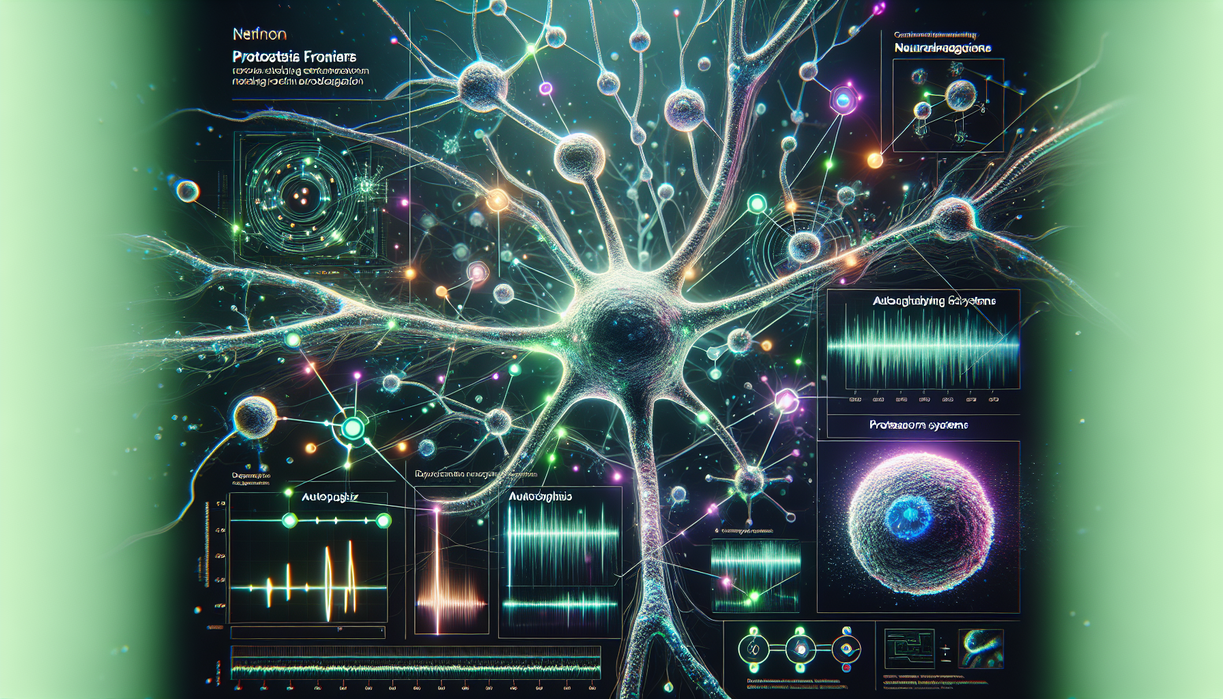
Preclinical studies indicate that NUZ‑001 activates autophagy, a key disposal route that helps cells recycle larger protein complexes and damaged organelles. Autophagy acts like a cellular recycling center, sequestering bulky waste inside vesicles before fusion with lysosomes. Boosting this process strengthens one side of the proteostasis equation, especially relevant for conditions where large aggregates overwhelm normal clearance capacity.
Yet the proteasome also plays a fundamental role in proteostasis, handling smaller, tagged proteins that require precise removal. Data suggest NUZ‑001 enhances proteasomal function alongside autophagic flux, which is notable because many drug candidates target one mechanism only. Combining both pathways could create a broader safety net for neurons, lowering the chance that misfolded proteins slip through and form persistent aggregates in vulnerable brain regions.
Multi‑Pathway Protein Clearance: Why It Matters
Neurodegenerative diseases such as Alzheimer’s, Parkinson’s, and ALS often share a unifying hallmark: disrupted proteostasis. Toxic clumps of misfolded proteins appear in distinct patterns, yet the underlying theme is impaired quality control. Historically, attempts to neutralize single proteins have produced mixed results. By contrast, NUZ‑001 embodies a systems‑level tactic, reinforcing the entire clearance infrastructure that sustains proteostasis under stress.
When both autophagy and the proteasome receive a functional boost, cells gain flexibility in how they dispose of unwanted material. Large protein assemblies, damaged mitochondria, and persistent aggregates can route through enhanced autophagy. Smaller, misfolded proteins tagged with ubiquitin can move more efficiently through a more active proteasome. This division of labor supports a more resilient proteostasis network, especially during chronic stress associated with aging.
From my perspective, the most intriguing part of the NUZ‑001 story lies in this layered defense concept. Instead of assuming one pathway will handle every burden, the strategy recognizes that neurodegeneration involves overlapping failures. Strengthening multiple clearance systems acknowledges the complexity of proteostasis rather than simplifying it away. That perspective aligns with a growing consensus that successful therapies must work with, not against, the cell’s natural maintenance architecture.
Personal Reflections on the Future of Proteostasis‑Targeted Drugs
NUZ‑001 remains at the preclinical stage, so many questions persist about safety, dosing, and real‑world effectiveness. Even so, its focus on multi‑pathway protein clearance highlights an encouraging shift in how scientists approach proteostasis. Instead of chasing single villains, researchers are learning to support the entire cellular community of chaperones, degradation systems, and stress responses. My view is that this integrative attitude may define the next era of neurodegeneration research. If future trials confirm that enhancing both autophagy and proteasomal routes can safely stabilize proteostasis over time, patients could gain therapies that slow decline rather than merely treating late symptoms. The journey will be long, yet each step toward a more holistic understanding of proteostasis brings us closer to interventions that respect the cell’s own wisdom while offering new hope for resilient brain health.