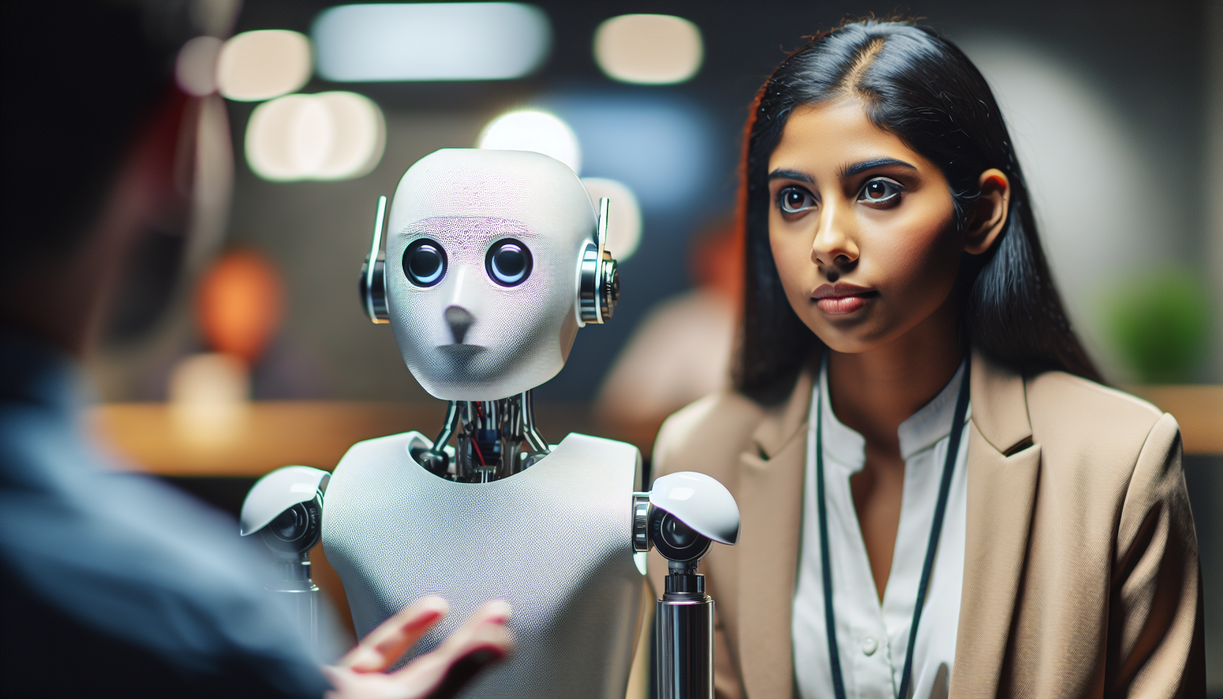
www.socioadvocacy.com – Podcasts often rely on great interviews to reveal emerging technology, yet few episodes dig as deeply into robot hearing as this conversation between Claire and Dr. Christine Evers. Their discussion turns a technical research field into a vivid story about how sound can guide machines through cluttered, noisy spaces. It feels less like a lecture, more like a guided tour through the acoustic lives of future robots.
Listening to interviews with researchers like Evers exposes a subtle shift in robotics. Vision once dominated the conversation; microphones played a supporting role. Now machine listening steps into the spotlight as robots learn to navigate, cooperate, and even protect humans through sound. This episode shows how advanced hearing reshapes our expectations of what intelligent machines can perceive.
From Human Ears to Robotic Listening
Robot hearing begins with a simple question: what does sound reveal that cameras miss? During interviews on this topic, Evers often points to everyday experiences. Humans notice a friend calling from another room, or a car approaching from behind a corner. No single photograph could capture that information. Our ears provide early warnings, hints about distance, and cues about hidden objects. Robots can benefit from the same acoustic clues, provided their software learns to interpret them.
Microphone arrays act as artificial ears. By comparing tiny differences between signals, a robot can estimate where a sound originates. This process resembles how humans use both ears to localize footsteps in a hallway. However, robots must cope with harsh acoustic environments. Hard walls create echoes, machinery generates constant hums, people speak over one another. Machine listening research seeks robust methods for separating useful signals from that surrounding chaos.
Interviews with experts like Evers reveal an important insight: sound is not just another data stream. It carries structure over time. A short burst might signal a door closing; a repeating pattern could identify a specific machine. Algorithms must pay attention to rhythm, duration, frequency content, and context. When robots capture such patterns, they gain a richer picture of their surroundings than vision alone can offer.
Why Interviews Matter for Emerging Robot Senses
Technical papers describe algorithms, yet interviews bring motivations and trade‑offs to life. When Evers discusses her work, she highlights ethical, social, and practical dimensions. For example, consider home assistance robots for older adults. Cameras may feel intrusive, especially in private spaces. Microphone‑based perception offers an alternative. A robot might detect a fall through a loud impact plus a distressed call for help. That kind of scenario makes the research feel urgent rather than abstract.
Interviews also reveal where theory collides with real environments. Laboratory recordings often use clean audio, carefully arranged microphones, controlled noise levels. Real homes, hospitals, or factories offer none of that order. Children shout, TVs blare, kettles whistle, doors slam. Evers emphasizes the need for machine listening systems that can adapt to those messy soundscapes. It is one thing to recognize speech in a studio, another to catch a faint cry for help through a wall.
As a listener, I value how these conversations expose uncertainty. Researchers admit where present methods fall short. Interfering noises still confuse localization algorithms. Overlapping voices challenge speech recognition. Privacy concerns linger. Interviews provide space to discuss not only achievements, but also doubts, failures, and open questions. That honesty builds trust with non‑experts who might eventually live or work alongside such robots.
My Take: Sound Will Make Robots Feel Less Blind
From my perspective, the most exciting idea emerging through these interviews is simple: hearing turns robots from moving cameras into fuller partners in human spaces. A robot that can localize a voice, distinguish routine clatter from urgent impact, and follow acoustic trails through a building feels far less blind. Challenges remain around noise, bias, and privacy, yet the trajectory seems clear. As machine listening matures, we will expect robots to respond when we speak softly from another room or when something sounds wrong down a corridor. Reflecting on this shift, I see robot hearing not as a technical add‑on, but as a crucial step toward machines that share our world with greater sensitivity and care.