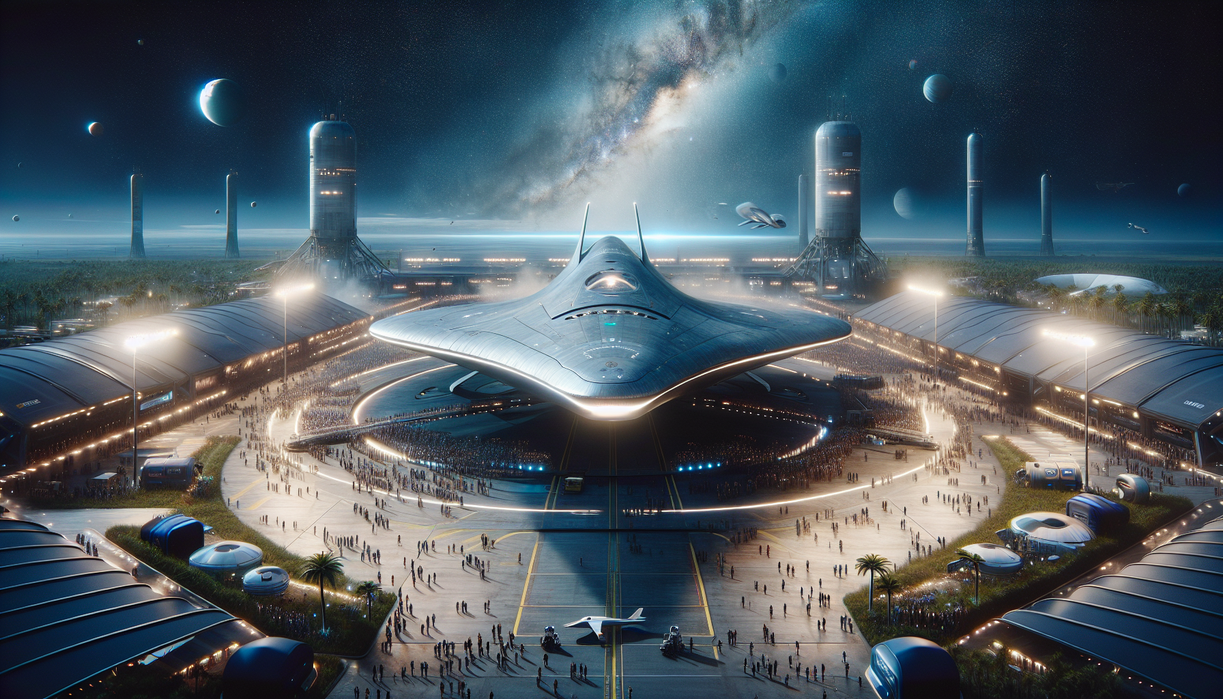
www.socioadvocacy.com – SpaceX stands on the edge of a defining decade. Between the evolving Starship program, a fast‑growing Starbase complex, and constant Starlink expansion, 2026 already looks like a pivotal year. Investors whisper about a blockbuster IPO, policymakers watch orbital milestones, while rivals scramble to keep up. The story no longer centers only on rockets; it now blends infrastructure, finance, regulation, and even urban planning. SpaceX is quietly turning a remote launch site into a full ecosystem for heavy‑lift missions, research, and future industry.
As Starship test flights grow more reliable, speculation intensifies over when SpaceX might finally open its books to public markets. A possible listing, combined with a higher valuation, could fund faster development of Starship V3, deeper Starlink coverage, plus ambitious projects around the Moon and Mars. 2026 emerges as a target window, not just for new hardware, but for SpaceX to cement its role as the backbone of a commercial space economy.
Starship V3: From Experimental Giant to Workhorse
SpaceX built Starship to reset the economics of space. Full reusability aims to drive down launch prices so far that whole new business models become possible. As early test campaigns push higher altitudes and more controlled reentries, engineers refine every subsystem. By the time a Starship V3 configuration arrives, the vehicle should reflect lessons gathered from dozens of flights, not just simulations. SpaceX treats each launch as both a mission and an experiment, then feeds data into rapid design cycles.
Version three will likely focus on performance, durability, and easier refurbishment. Heat shield tiles need faster replacement, Raptors must survive many flights with minimal overhaul, plus tanks must tolerate repeated stress. A practical workhorse Starship should support frequent launches each year rather than rare showpiece missions. If SpaceX hits those goals before or during 2026, it will move from impressive demos to industrial‑scale transport for satellites, cargo, and eventually crews.
My view is that V3 marks the tipping point where Starship stops being “the next big thing” and becomes essential infrastructure. Once customers see a reliable vehicle with predictable schedules and competitive pricing, they begin to design entire constellations, space stations, or resource missions around it. SpaceX understands this psychological shift. The company pushes towards a cadence where launch feels routine, almost boring, even though the technology remains cutting‑edge. When that mindset spreads, demand can grow faster than many traditional aerospace planners expect.
Starbase as a City: More Than a Launch Site
While rockets grab headlines, the transformation of Starbase may prove just as important for SpaceX. The idea of granting city status to Starbase signals ambition beyond a mere industrial zone. It hints at a self‑contained hub for engineering, fabrication, testing, housing, tourism, and research. Such a cluster creates efficiencies similar to Silicon Valley or Shenzhen, where talent, suppliers, and services live side by side. Rockets roll out nearby, teams iterate designs immediately, and logistics simplify.
A future Starbase city also shapes the culture around SpaceX. Instead of a remote base with rotating staff, you get a community of engineers, technicians, entrepreneurs, and families. Schools, labs, startups, and hotels could orbit the core rocket business. That environment fosters experimentation and spin‑off ventures. Think specialty manufacturing for space habitats, advanced robotics, or even biotech optimized for microgravity experiments. Once infrastructure takes root, outside companies will want presence there as well.
Personally, I see Starbase evolving into a model for “spaceport cities” worldwide. If SpaceX proves a city centered on orbital transport can thrive, other regions will copy that blueprint. We might see competing hubs near equatorial coasts or close to future lunar logistics nodes. This urban angle sounds less glamorous than Mars colonies, yet it might be the real near‑term revolution. Permanent spacefaring civilizations require places on Earth where hardware, people, and capital interact at scale. Starbase represents SpaceX’s first serious prototype of such a place.
The Road to a Potential SpaceX IPO in 2026
Against this backdrop, a potential SpaceX IPO around 2026 becomes easier to imagine, though far from guaranteed. A successful Starship V3, a maturing Starbase city concept, and robust Starlink revenue streams would give public investors a clearer story: a company owning launch infrastructure, broadband networks, plus a quasi‑urban spaceport platform. I suspect leadership will wait until operational risk feels manageable and growth pathways look well defined. If those conditions align, a public listing could raise huge capital for deep‑space projects while also testing market appetite for off‑world ambitions. Regardless of timing, the next few years will show whether SpaceX can convert bold engineering into durable institutions that outlast any single founder, turning visions of multi‑planetary life into structured, investable reality.