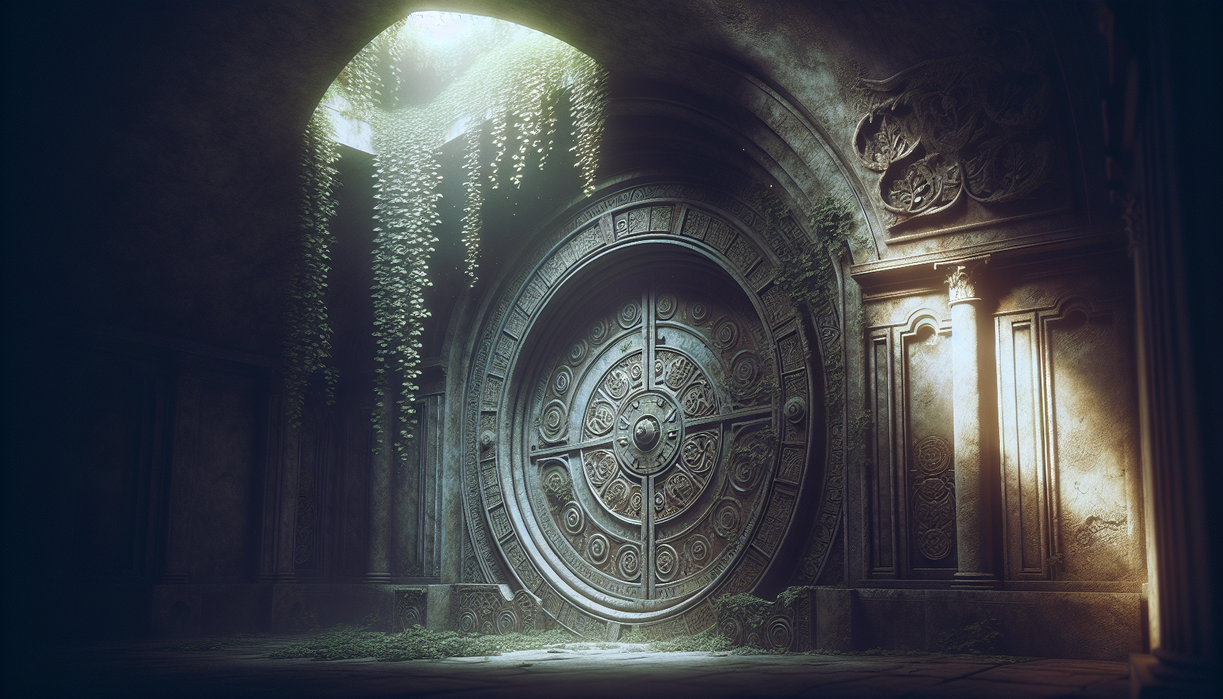
www.socioadvocacy.com – News of a sealed underground chamber, hidden for roughly 700 years beneath an ordinary town, feels like the prologue to a novel. Yet this discovery is very real, and it instantly reshapes how residents understand the ground under their daily routines. Archaeologists expected small traces of the past, perhaps a cellar or drain, not a massive enclosed void preserved across centuries.
This chamber, untouched since medieval times, raises more questions than it answers. Why was such a large structure closed off so thoroughly? Who last walked through its darkness before it was sealed? As experts prepare to enter, measure, and document every stone, the chamber itself has already opened a door in our imagination, inviting speculation about history, memory, and buried secrets.
A Medieval Chamber Frozen in Time
The first surprise for the research team was the sheer scale of the chamber. Ground-penetrating radar hinted at a hollow space, but the instruments did not fully convey its height, length, or meticulous construction. Once a small access corridor appeared beneath a cracked stone slab, archaeologists realized they had found something far more ambitious than a storage pit or ordinary basement.
Preliminary dating of bricks, mortar, and associated artifacts suggests the chamber was built roughly seven centuries ago. That timeline places it squarely in the late medieval period, when fortified towns, religious brotherhoods, and merchant guilds flourished. A chamber from this era could represent almost anything: an emergency refuge, a ritual space, a clandestine meeting hall, even a private vault for a wealthy family eager to conceal resources.
For now, the chamber’s interior remains mostly off-limits while engineers assess structural stability. Even limited glimpses through cameras reveal carefully dressed stone walls, arched recesses, and hints of carved motifs. These details suggest purposeful design rather than improvisation. Whatever story this chamber tells, it was not built casually. Generations invested skill, money, and probably secrecy in its creation.
Speculation, Stories, and Scientific Clues
Without full access to the chamber, speculation spreads quickly across the town. Some residents imagine lost treasure; others whisper about secret societies or forbidden rites. Local legends, long dismissed as folklore, have gained sudden relevance. Old tales of tunnels beneath the market square no longer sound like fantasy once a massive sealed chamber has actually been confirmed.
From an archaeological perspective, the most valuable treasure might not be gold, but context. Layers of dust, soot, seeds, textiles, or discarded tools can reveal how the chamber functioned across time. Microscopic analysis of soil and residue may identify traces of smoke, incense, wine, or grain, each hint pointing toward worship, feasting, storage, or refuge. The absence of certain materials could be just as telling as their presence.
Personally, what fascinates me most is the decision to seal the chamber so completely. Construction is effort; closure is intention. Something prompted a community to invest energy not only to build this hidden place but also to erase surface access. Was it fear of invasion, a shift in political power, or a change in religious practice? The chamber is a physical space, yet it also represents a moment when people chose to bury part of their world.
What a Chamber Like This Means for Our Present
Discoveries like this chamber do more than add pages to local history; they alter how we see the present landscape. Streets, houses, and plazas now sit above a vast unknown, proof that everyday life floats over layers of decisions, crises, hopes, and disappearances. This chamber, locked for centuries, reminds us that communities often hide uncomfortable or valuable aspects of themselves, sometimes quite literally. As archaeologists document every feature, residents will likely negotiate how much of this past they want to claim, celebrate, or question. The chamber becomes a mirror of modern priorities: whether we choose to confront buried truths or preserve them as curiosities, admired yet carefully contained beneath glass and guided tours.