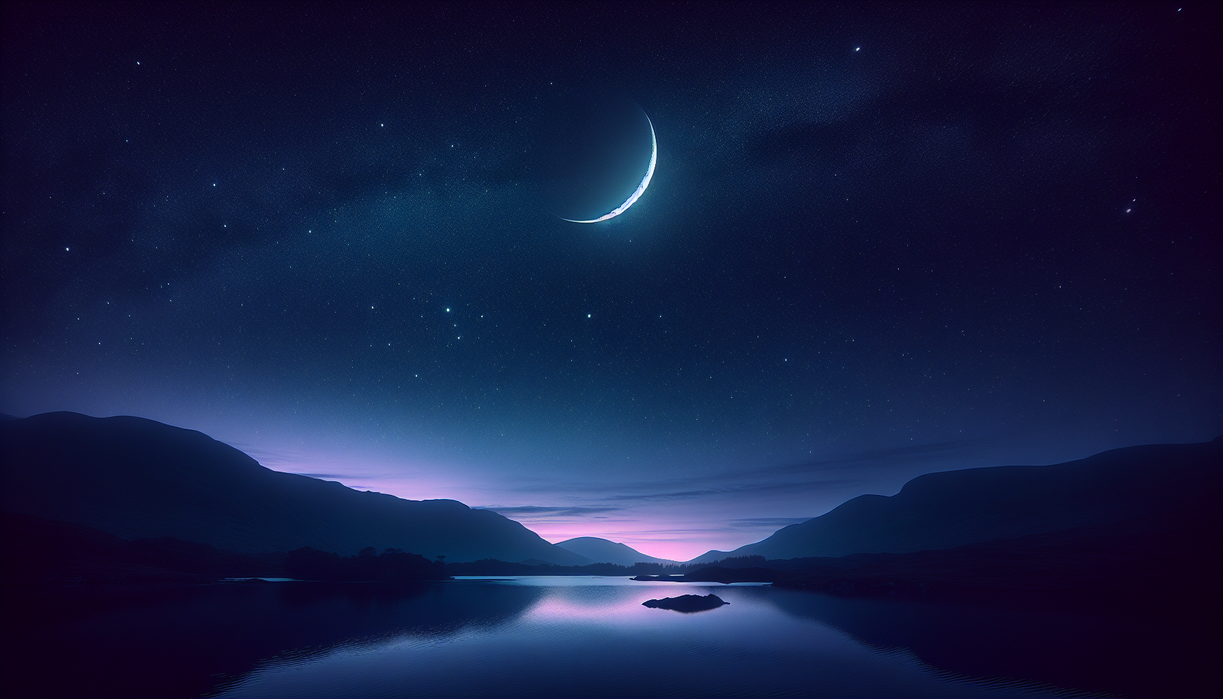
www.socioadvocacy.com – Look up into the vastness of space tonight and you might struggle to find the Moon at all. As we approach the New Moon on January 17, our familiar neighbor turns into a subtle, ghostly crescent where most of its face sinks into darkness, leaving only a slim edge kissed by sunlight.
This quiet transformation in space is easy to miss, yet it reveals how perfectly choreographed the Sun, Earth, and Moon truly are. By noticing how much of the Moon we can actually see on this date, you begin to feel part of a larger cosmic rhythm unfolding just overhead, night after night.
The Moon’s January 17 Face in Space
On January 17, the Moon hides near the Sun’s direction, so only a paper-thin slice receives direct light from our star. From Earth, this creates a waning crescent that hugs the morning or early evening sky. Most of the lunar surface faces away from the Sun, which explains the dark disk you can barely detect against the black canvas of space.
Technically, we are only a short step away from the exact New Moon moment, when the Moon slips between Earth and Sun. During that instant, the part lit by sunlight faces fully away from us. So on January 17, you witness the final act before the curtain closes, when the visible crescent shrinks toward invisibility, a delicate arc hanging low above the horizon.
If you gaze carefully into space before dawn or just after sunset, you might catch that whisper of light. Binoculars reveal the crescent more clearly, plus a hint of “Earthshine” faintly illuminating the dark side. This is sunlight bouncing off our planet, softly lighting the Moon’s night. It is a reminder that Earth itself becomes a beacon in space, shining gently on its companion.
How Lunar Phases Work in the Theater of Space
Lunar phases are not magic tricks; they are geometry playing out in space. The Moon orbits Earth, while both orbit the Sun. As the Moon moves along its path, we see different fractions of its daylit half. The shape we call a phase is simply the visible portion of that illuminated side from our viewpoint on Earth.
When the Moon reaches New Moon, it sits roughly between Earth and Sun, so its lit half faces away from us into space. A week later, it becomes a First Quarter Moon, where we see half the disk bright. Another week leads to the Full Moon, with the lit face turned almost completely toward us. Each step reflects a changing angle, a slow dance guided by orbital motion.
On January 17, the Moon is sliding toward that New Moon alignment, so the angle is extremely small. Only a tiny sliver of the daylit surface peeks out. When you understand this geometry of space, the Moon’s shifting face becomes less mysterious, yet somehow more awe-inspiring. You are not just watching the sky; you are reading the Solar System’s clock.
My Perspective on Watching the Moon in Space
For me, the waning crescent near New Moon is the most contemplative phase to observe in space. It demands you slow down, shield your eyes from city lights, and search for subtlety instead of spectacle. While a Full Moon feels bold and obvious, this faint curve of light seems to invite questions about cycles, endings, and fresh beginnings. Each time I see it, I remember that even when something fades almost completely from view, its journey continues silently through space, preparing for the next bright return.