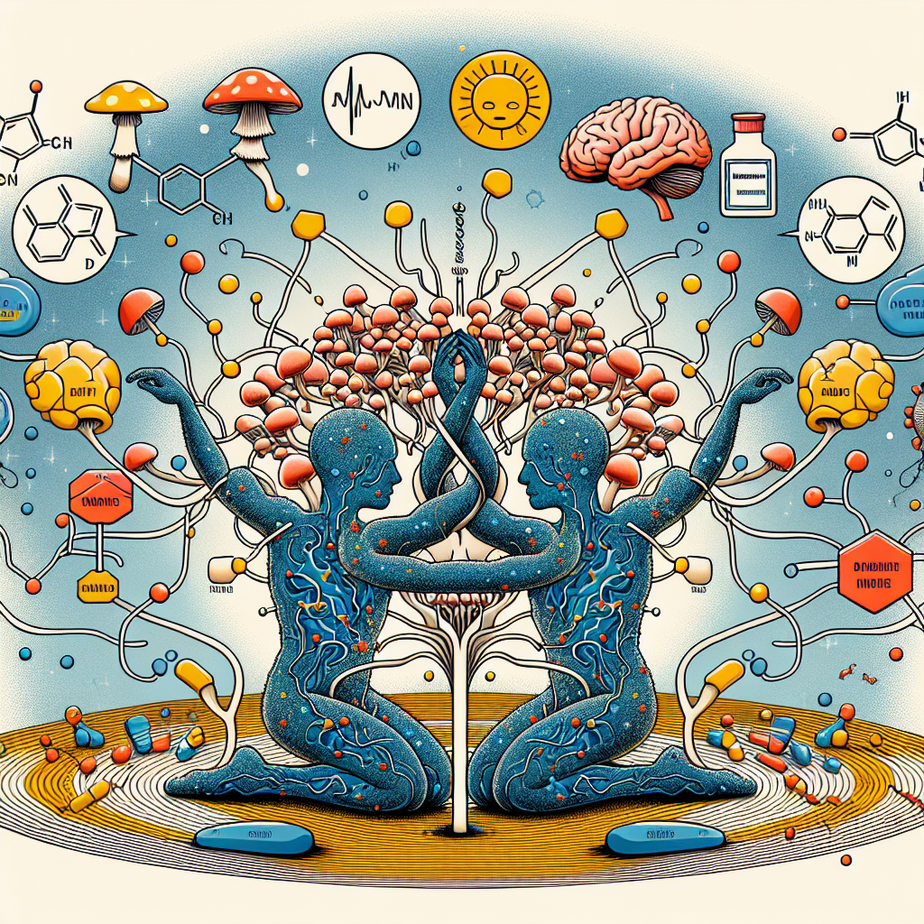
www.socioadvocacy.com – In a groundbreaking study that blends ancient natural remedies with cutting-edge science, researchers have introduced an unexpected duo: psilocybin, the hallucinogenic compound derived from certain mushrooms, and the rabies virus. This unusual combination has shown promise in mapping the brain’s response to psychedelic therapy, potentially paving new paths in the treatment of depression. Driving this research is an international team spearheaded by scientists from Cornell University, who are making strides in understanding how these compounds influence neural pathways.
Psilocybin has long intrigued the medical community due to its ability to induce profound changes in perception and cognition. These psychedelic experiences have shown therapeutic potential, especially in the context of mental health disorders. Meanwhile, the rabies virus—typically associated with danger—has been employed here in a controlled manner to explore brain connectivity. The researchers have found a novel way to utilize the virus’s ability to trace neural circuits, offering a deeper insight into how psilocybin rearranges brain connections.
The implications of this study are vast. Depression is a multifaceted disorder affecting millions worldwide, and current treatments are not universally effective. By mapping the precise locations and mechanisms through which psilocybin impacts the brain, scientists hope to create more targeted therapies that could provide relief where conventional methods fall short. What’s particularly exciting is the prospect of these findings leading to treatments that are not only more efficient but also carry fewer side effects than traditional antidepressants.
Critics may raise eyebrows at the use of something as ominous as the rabies virus in research, but it’s crucial to remember that its application here is highly controlled and specific. The partnership of these two agents is not about introducing risk but leveraging their unique properties to advance our understanding of the brain’s plasticity. This study exemplifies how unconventional thinking can lead to novel insights that hold the potential to redefine treatment paradigms.
As we await the outcomes of continued research in this fascinating field, it is essential to highlight the broader impact of such interdisciplinary collaborations. By bridging the gap between natural remedies and modern neuroscience, we are entering an era where mental health treatment can be revolutionized. The promise of personalized and precisely targeted therapies could ultimately transform the lives of those battling depression, offering hope where it was once elusive.
Exploring the Neural Landscape
The use of psilocybin in mental health is not entirely new, yet our understanding of its impact on the brain’s intricate network remains incomplete. This study sheds light on the specific neural pathways influenced by the compound. By utilizing the rabies virus as a mapping tool, researchers can meticulously track the alterations in the brain’s wiring, offering a clearer picture of how psilocybin facilitates change. This could be pivotal in identifying key areas responsible for mood regulation and emotional processing.
Such detailed brain mapping could enhance the precision of psilocybin-based treatments. With this knowledge, interventions could be more finely tuned to target areas most affected in individuals suffering from depression, potentially increasing the efficacy of treatments. Moreover, the study opens up possibilities for similar methodologies to be applied in understanding and treating other mental health conditions, broadening the scope of psychiatric therapeutics.
A New Horizon for Mental Health
The integration of unconventional tools in scientific research often faces skepticism, yet history shows that many significant breakthroughs come from exploring beyond traditional boundaries. This innovative use of the rabies virus exemplifies such boldness. By reframing an agent of disease into a tool for healing, scientists showcase the remarkable adaptability of scientific inquiry.
As someone who follows developments in mental health avidly, I find this approach particularly exciting. It speaks to the potential that lies in cross-disciplinary efforts to address complex problems like depression. By casting aside conventional limitations and embracing a more holistic view, research teams can unlock new solutions that redefine what’s possible for mental health treatment. This fusion of the unexpected not only pushes scientific boundaries but also offers a beacon of hope for brighter futures.
In conclusion, the study conducted by Cornell and their international partners marks a significant step forward in mental health research. By combining the ancient with the modern, we are reminded that innovation often requires looking beyond the obvious. As the research progresses, it not only contributes to our scientific understanding but also holds the promise of tangible improvements in therapeutic approaches to depression. The road may be long, but the journey towards understanding the mysteries of the brain is undeniably crucial and exciting.