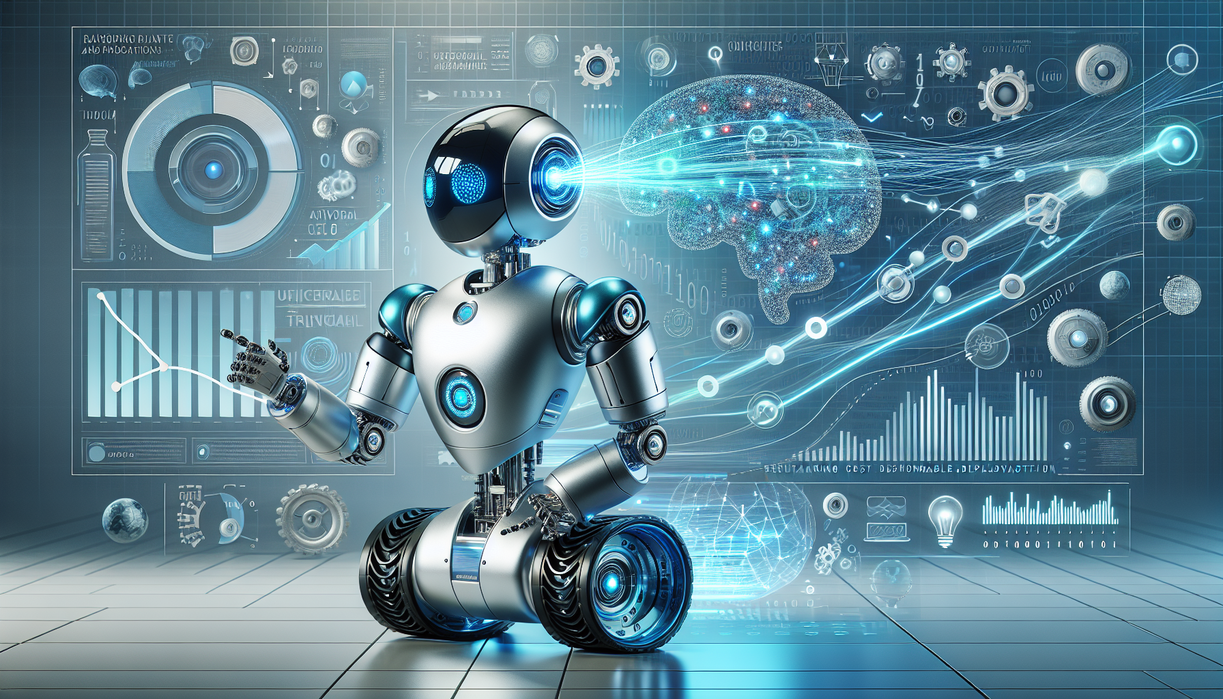
www.socioadvocacy.com – Artificial intelligence is steadily moving from screens into the physical world, and robots are its most visible frontier. The open-sourcing of LingBot-VLA by Robbyant, Ant Group’s embodied AI unit, signals a bold step toward giving machines a shared “universal brain” for perception, language, and action. Instead of isolated systems that only see, or only talk, or only move, this model fuses all three into a single coordinated capability.
By releasing LingBot-VLA to the public, Robbyant invites researchers, startups, hobbyists, and industry players to experiment with embodied artificial intelligence at scale. This shift could accelerate how robots understand human instructions, interpret visual scenes, and execute complex tasks in unstructured environments. It also raises important questions about safety, ethics, and control as intelligent machines gain more autonomy in the spaces we live and work in.
From Lab Experiments to a Universal Robot Brain
LingBot-VLA is framed as a vision-language-action model, which means it combines computer vision, natural language understanding, and motion planning into a unified artificial intelligence pipeline. Rather than training separate modules for perception or control, the system learns to map images and text prompts directly to actions in the real world. This approach mirrors how humans integrate sight, speech, and movement into a continuous loop of perception and response.
In practical terms, a universal brain for robots could handle tasks across different platforms, from mobile robots in warehouses to articulated arms in factories or service bots in public spaces. The same artificial intelligence model can be adapted, fine-tuned, or extended for specific machines without rewriting the foundational logic each time. That reuse lowers the barrier for robotics projects, which historically have required highly specialized engineering per device.
Open-sourcing the model changes the innovation dynamic. Instead of one company guarding a proprietary system, many contributors can improve training data, refine safety layers, or explore niche applications. This kind of collaborative ecosystem often leads to rapid iteration, creative use cases, and unexpected breakthroughs. It can also expose weaknesses faster, as more eyes test the artificial intelligence across diverse environments and scenarios.
How Vision-Language-Action AI Changes Robotics
Traditional robots rely on pre-programmed routines and carefully structured environments. A conveyor-belt arm, for example, repeats the same motion thousands of times with minimal variation. Vision-language-action artificial intelligence attempts to break out of that rigidity. Instead of brittle scripts, robots can respond to high-level human instructions such as “pick up the red cup on the left table” or “tidy the items on this shelf” while interpreting visual input in real time.
LingBot-VLA’s architecture, though technical, carries an intuitive idea. It learns joint representations of images, text, and actions so that a phrase like “open the door” becomes connected to visual patterns representing doors and motor patterns that turn handles or push panels. Over time, this mapping enables robots to generalize across new rooms, novel layouts, and unfamiliar objects, provided the artificial intelligence has seen something similar during training.
For everyday users, this integration could translate into robots that feel far more natural to instruct. Instead of using clunky interfaces or custom commands, people might talk to robots conversationally while pointing at objects. Combining language with vision gives the system rich context, while the action component grounds it in physical reality. That triad is essential if we want machines to assist in homes, hospitals, and public spaces without constant expert supervision.
Why Open-Sourcing Matters for Embodied AI
Releasing LingBot-VLA as open source may be the most consequential choice in this story. Embodied artificial intelligence is notoriously expensive to develop, because models must be tested not only in simulation but also on real hardware with wear, tear, and safety risks. By sharing a strong baseline model, Robbyant reduces the cost of entry for universities, smaller companies, and independent developers. They can build on a proven foundation instead of reinventing basic capabilities, focusing effort on safety, alignment, and specialized applications. From my perspective, this openness is a double-edged sword: it turbocharges innovation while exposing society to faster deployment of intelligent machines. The key will be responsible governance, transparent benchmarks, and community-driven norms that keep this powerful technology aligned with human values. In the long run, an open but guided ecosystem could be the best path to ensure artificial intelligence in robotics grows not just more capable, but also more trustworthy and humane.