www.socioadvocacy.com – Spirographic AI is pushing drug discovery into a new era by placing human tissues at the very center of prediction. Instead of treating the body as a single uniform system, spirographic ai has built a platform that maps how medicines behave across specific organs. This shift promises to reduce costly failures, reveal hidden risks, and uncover broader therapeutic value long before a compound reaches clinical trials.
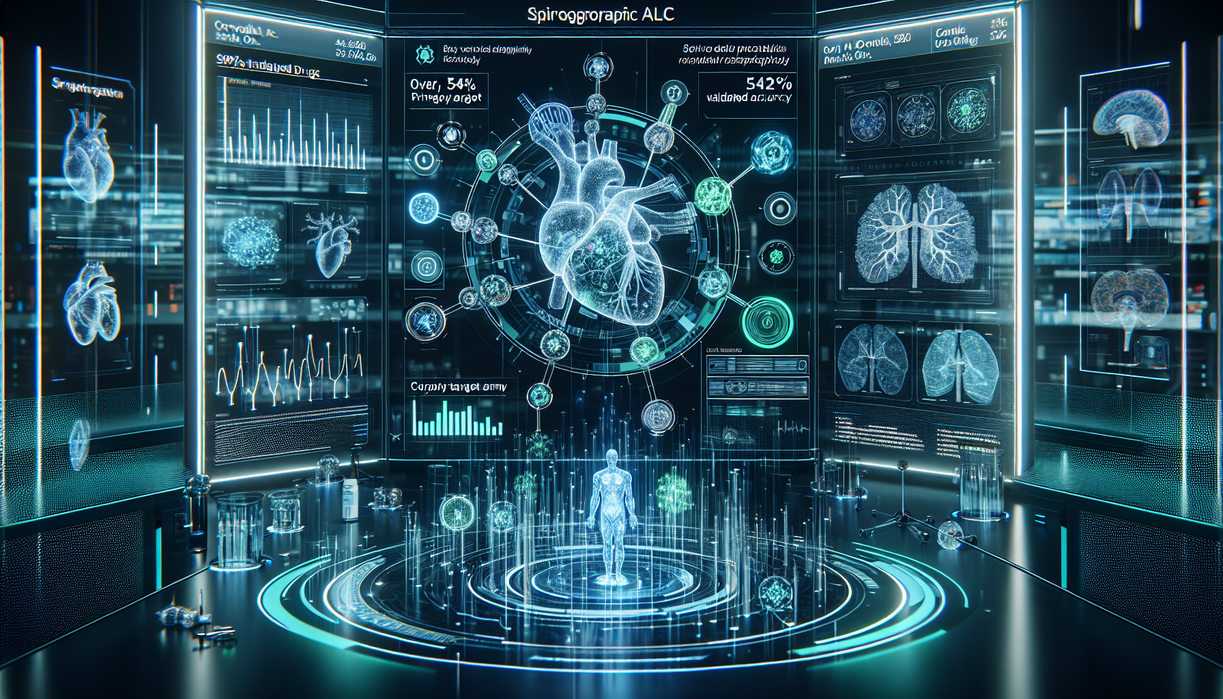
At the heart of this advance is a tissue-specific polypharmacology engine, tested on more than 200 approved medicines across eight organ systems. Spirographic ai reports a 54% accuracy rate for anticipating primary drug targets, a performance roughly two to three times higher than typical industry benchmarks. If sustained at scale, this could reshape how research teams prioritize targets, design molecules, and decide which candidates deserve real-world testing.
Tissue-Centric Polypharmacology Comes of Age
Most computational drug discovery tools start from molecules or targets, then layer biology on top. Spirographic ai flips that script by starting from tissues first. By modeling the complex protein networks specific to organs such as heart, liver, brain, and kidney, the platform estimates where a compound is likely to bind most powerfully. This tissue-first view acknowledges a hard truth in medicine: a drug does not act the same way everywhere in the body.
Polypharmacology recognizes that successful medicines rarely hit only one target. Instead, they touch a constellation of proteins, with some interactions helpful and others harmful. Spirographic ai appears to embrace that complexity rather than filter it away. Its platform looks across these networks tissue by tissue, aligning predicted interaction patterns with known drug behavior to improve accuracy over time.
The reported 54% primary target prediction rate might sound modest at first glance, yet context matters. Many current pipelines struggle to reach half that figure when validated against real-world drugs. If spirographic ai consistently doubles today’s norms, it allows researchers to move with higher confidence. That extra precision could shrink experimental search space, minimize dead ends, and accelerate projects from concept to candidate selection.
Inside the 200-Drug, 8-Organ Evaluation
The evaluation of more than 200 medicines across eight organ systems offers a rare, grounded look at how the platform behaves against reality. These are not hypothetical molecules but compounds with well-documented clinical effects. Spirographic ai tested its tissue-specific models by asking a simple, but decisive, question: can the platform correctly identify each drug’s main target inside the relevant organ context?
Organ diversity plays a key role here. A medicine that works beautifully in the brain might trigger problems in the liver or heart. By including multiple organ systems in one unified framework, spirographic ai moves closer to real clinical complexity. The platform does not merely guess which protein a molecule touches; it estimates which target matters most inside each tissue. That nuance is essential for anticipating both therapeutic benefits and potential off-tissue risks.
From my perspective, this evaluation strategy feels pragmatic. It balances scope with depth, enough drugs to test robustness yet focused enough to inspect errors. When predictions fail, researchers can probe why: missing biological data, rare pathways, or unexpected protein states. Those insights help refine the model, so accuracy climbs not just numerically but mechanistically. Over time, that feedback loop could become spirographic ai’s most important asset.
Why Tissue-Specific Insight Matters for Patients
For patients, tissue-specific prediction is not an abstract modeling victory, it is a path to safer and more effective therapies. By understanding how a candidate behaves in heart tissue versus liver or brain, spirographic ai can help teams flag risky interactions before they show up as side effects. At the same time, the same engine might reveal new uses for existing medicines where interactions in a different organ prove unexpectedly beneficial. In a healthcare landscape burdened by high trial failure rates and rising costs, the ability to see drug behavior through a tissue-focused lens offers a practical way to redesign pipelines around human biology rather than convenience or habit.