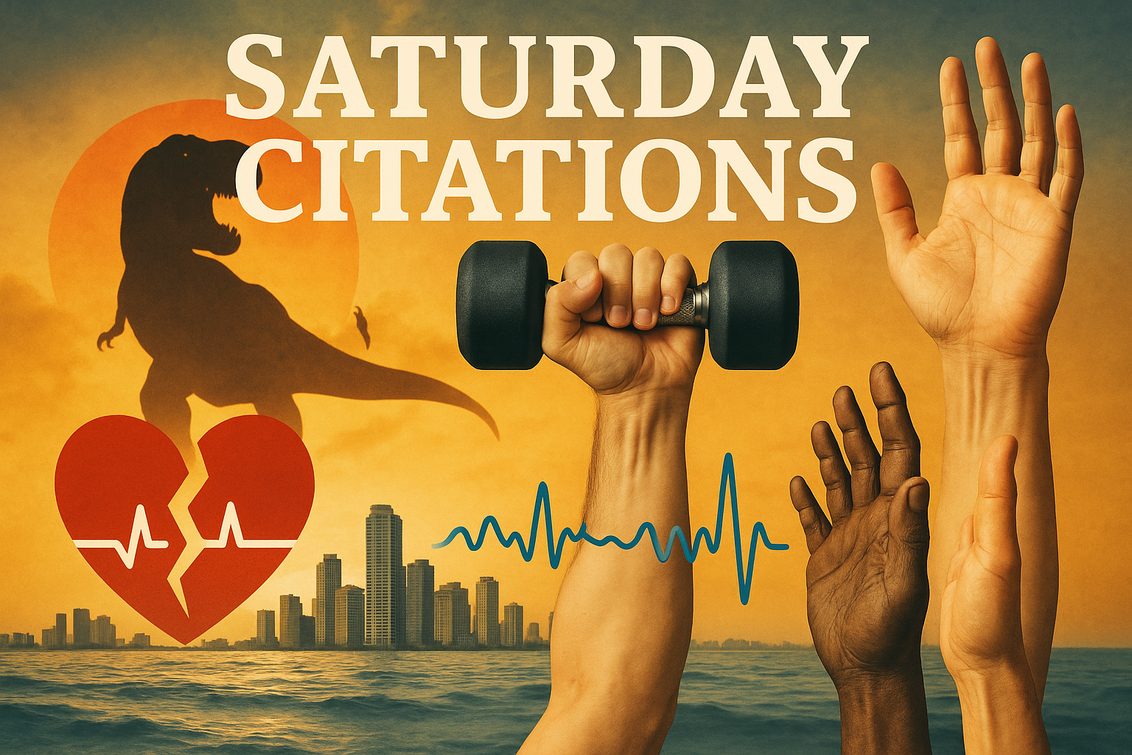
www.socioadvocacy.com – Context quietly steers every scientific headline, from fossils to fitness trackers. Without context, a T. rex skull is just a giant bone and a new workout guideline is only another list of reps. Once we add background, comparison, and purpose, those same facts turn into a story about evolution, climate risk, mental health, and what it means to be human right now.
This week’s research highlights show how context can reframe familiar topics. The mighty Tyrannosaurus rex looks different beside its close cousins. Exercise advice gains urgency when heart risk enters the picture. Grip strength becomes more than a gym brag when linked to depression. Even rising seas feel less abstract when placed against coastal maps, migration pressures, and personal futures.
Why Context Matters More Than Headlines
Context is the difference between data and meaning. A single fossil, a blood pressure reading, or a satellite snapshot of the ocean offers only a fragment. Once scientists connect that fragment to history, environment, and human behavior, patterns emerge. Those patterns allow better predictions, smarter choices, and fewer nasty surprises. Every study discussed here shows how science advances by stitching individual findings into a wider framework.
The week’s dinosaur research illustrates this. Two T. rex type specimens might look similar at first glance, yet subtle differences in bone structure hint at variation across time, geography, or growth stage. Put those skeletons back into their original ecosystems and the puzzle shifts. Were these separate species, regional variants, or just different ages of one predator? Only context, not a single jawbone, can resolve that debate.
Health research follows the same rule. Exercise guidelines appear blunt on paper: so many minutes, so much intensity. But add the context of rising heart disease, sedentary jobs, and mental health struggles, and those numbers turn personal. New findings do not promise an easy path. They suggest a realistic one, grounded in how bodies actually respond to effort, stress, and aging. Science here is not a set of orders; it is a negotiation between evidence and everyday life.
Two T. Rexes, Many Stories
Put two T. rexes side by side and context jumps straight into view. One specimen might show thicker leg bones, another a more robust jaw, a third lighter build overall. Some paleontologists interpret those differences as evidence for multiple closely related species. Others argue we are simply seeing normal variation, influenced by age, sex, diet, or even injury. Without a broader sample, both interpretations remain plausible.
Context for these predators includes the world they inhabited. Late Cretaceous North America was no static backdrop. Sea levels shifted, climates fluctuated, and prey herds moved. If one region offered larger herbivores and denser forests, another might favor faster, more agile hunters. In that light, anatomical differences within T. rex remains may reveal adaptation to local conditions instead of strict speciation.
My perspective leans toward patience. It is tempting to split every variation into a new species because distinct labels feel satisfying. Yet evolutionary context warns against rushing. Modern big cats, for instance, display impressive variation in size and skull shape across environments while still belonging to one species. As more fossils surface, context will clarify whether T. rex was a single flexible carnivore or a cluster of related lineages sharing a fearsome brand.
From Fossils to Human Identity
Debates over T. rex identity might seem esoteric, yet context links them straight to human questions. If one lineage adapted through subtle tweaks instead of dramatic splits, that supports a picture of evolution as constant refinement. It also reframes our own story. Our species did not appear in a vacuum. We emerged from populations with variety, trade‑offs, and local solutions, just as those ancient predators did. Keeping that context in mind helps deflate myths of sudden perfection and invites humility about our place in deep time.
Exercise, Effort, and Honest Context
New exercise guidance rarely includes the word easy for a reason. When scientists sift through massive datasets on heart events, mortality, and fitness, a clear theme emerges. The most powerful benefits usually arrive when effort crosses from gentle motion into moderate or even vigorous intensity. Context again alters interpretation. That jump in effort does not require elite training. It does demand more than casual strolling to the fridge.
Recent analyses suggest that short bursts of hard activity, accumulated across a week, can rival longer, steady sessions. Climbing stairs briskly, cycling up a hill, or carrying heavy groceries at pace all count if breathing and heart rate rise enough. In context, that means daily routines can serve as training platforms. The barrier is less about access to a gym and more about willingness to embrace discomfort, within safe limits.
My own reading of these findings is cautiously optimistic. On one hand, the data insist that intensity matters, which challenges the popular promise of effortless wellness. On the other hand, context widens the menu of acceptable activity. Many people already experience brief hard efforts. Reframing those as intentional training, then nudging duration or frequency upward, could close the gap between recommendations and reality without demanding an athlete’s schedule.
Grip Strength, Heart Health, and Mood
Grip strength seems trivial until context connects it to heart health and mental state. Several large studies now link weaker grip with higher risk of cardiovascular problems and earlier mortality. It is not that hand muscles control the heart directly. Instead, grip operates as a quick proxy for overall muscle function, nerve health, and lifelong activity. A weak handshake hints at compromised systems elsewhere.
More surprising, recent work pairs grip strength with depression risk. People with lower grip scores often show higher rates of depressive symptoms. Context here is complex. Depression can erode motivation to move, which gradually reduces muscle strength. Chronic inflammation, disturbed sleep, and stress hormones also interfere with muscle repair. The arrow of cause likely runs both ways, entangling body and mind.
From my perspective, these findings argue against strict separation of physical and mental health. A simple grip test in a clinic could flag hidden vulnerability long before a crisis emerges. That does not mean strength training alone cures depression, yet improving physical capacity changes how daily life feels. Carrying bags without strain, opening jars without frustration, or rising from a chair with ease subtly reinforces agency. In context, those tiny victories may support broader recovery.
Redefining Strength in Real Life
Seen through this lens, strength becomes less about aesthetics and more about resilience. Grip metrics turn into an invitation to treat movement as emotional hygiene, not just body sculpting. For someone hesitant about gyms, light resistance training at home or manual hobbies like gardening and woodworking can nurture both muscles and mood. What matters is engaging with the body as a partner. Context transforms exercise from punishment for past behavior into preparation for future challenges.
Rising Seas, Evolving Hands, Changing Futures
Context also reshapes climate reports. A number like twenty centimeters of sea‑level rise sounds small on paper. Once paired with storm surges, tidal flooding, and crowded coasts, the picture sharpens. Homes that once flooded once a century may face water every few years. Infrastructure designed for a bygone baseline starts to fail. Migration pressures build not from a single dramatic event but from accumulating inconveniences that tip life from manageable to impossible.
Scientists refine these projections with satellite data, tide gauges, and ice‑sheet models. Yet local context still rules experience. A few centimeters can devastate a low‑lying island while barely touching a high bluff. Social context matters as much as topography. Communities with fewer resources struggle to elevate homes, redesign drainage, or relocate. Climate numbers contain an ethical dimension because not everyone shares the same buffer.
In parallel, new work on how ape‑like hands evolved into human ones offers a different time scale for context. Subtle shifts in wrist bones and thumb length opened the door to precision grips. Over generations, that capacity allowed toolmaking, art, and, eventually, keyboards. When we scroll climate charts or read exercise studies on a phone, we are using structures molded by ancient selection pressures. That long view reminds me that adaptation is both natural and slow. The challenge now is that our environment is changing faster than biological evolution can track.
Living Responsibly With Scientific Context
Context, then, is not only an academic concern. It is a practical tool for navigating messy choices. When new T. rex research appears, I try to ask what it implies about variation, survival, and our modern biodiversity crisis. If a single predator line could thrive through subtle adjustments, perhaps the best conservation strategy today protects niches and corridors that enable flexible responses instead of focusing only on a few emblematic species.
For health advice, context helps resist both cynicism and hype. Instead of dismissing new exercise targets as unrealistic or chasing miracle routines, we can place each recommendation beside our own constraints. How much intensity can my joints handle? Where can I safely reach that level in my neighborhood? Which small increase is sustainable this month? Framed this way, guidelines become prompts for experimentation rather than rigid orders.
Climate context requires a similar mindset. No individual can stop sea‑level rise alone, yet everyone operates inside networks of influence. That might be voting for infrastructure bonds, supporting local adaptation plans, or choosing careers that bend emissions curves. On a personal scale, it means honestly assessing where I live, what risks I face, and what insurance, savings, or community ties I actually possess. Science provides the map; context tells me where I stand on it.
A Reflective Conclusion on Context
Across dinosaurs, deadlifts, depression, coastlines, and thumbs, context emerges as the quiet protagonist of science. It invites slower reading, sharper questions, and more humble judgments. Facts on their own rarely instruct us how to live; they only mark possible paths. When we place those facts beside history, environment, relationships, and personal limits, they gain moral weight. My hope is that by paying closer attention to context, we can respond to new findings not with panic or denial, but with thoughtful adjustments that honor both evidence and experience.