www.socioadvocacy.com – The discovery of a lost Old English masterpiece in a quiet Roman library shows how powerful patient scholarship can be. As reported through the Associated Press, researchers from Dublin located an overlooked manuscript of “Caedmon’s Hymn,” now believed to be the oldest surviving poem in English, resting unnoticed inside a medieval book. This quiet revelation did not happen in a high‑tech vault, but in a reading room where turning one more fragile page changed the story of English literature.
The Associated Press coverage highlights more than a lucky find; it captures a collision of cultures across centuries. A 7th‑century Northumbrian hymn, hiding in a volume preserved in Rome, brings together Irish researchers, Italian librarians, and global readers. This convergence shows how literature can leap borders and eras, recombining in unexpected places. For me, this is not only an archival success story, but also a reminder that the roots of English creativity still have surprises left to share.
A Medieval Whisper Reaches the Associated Press
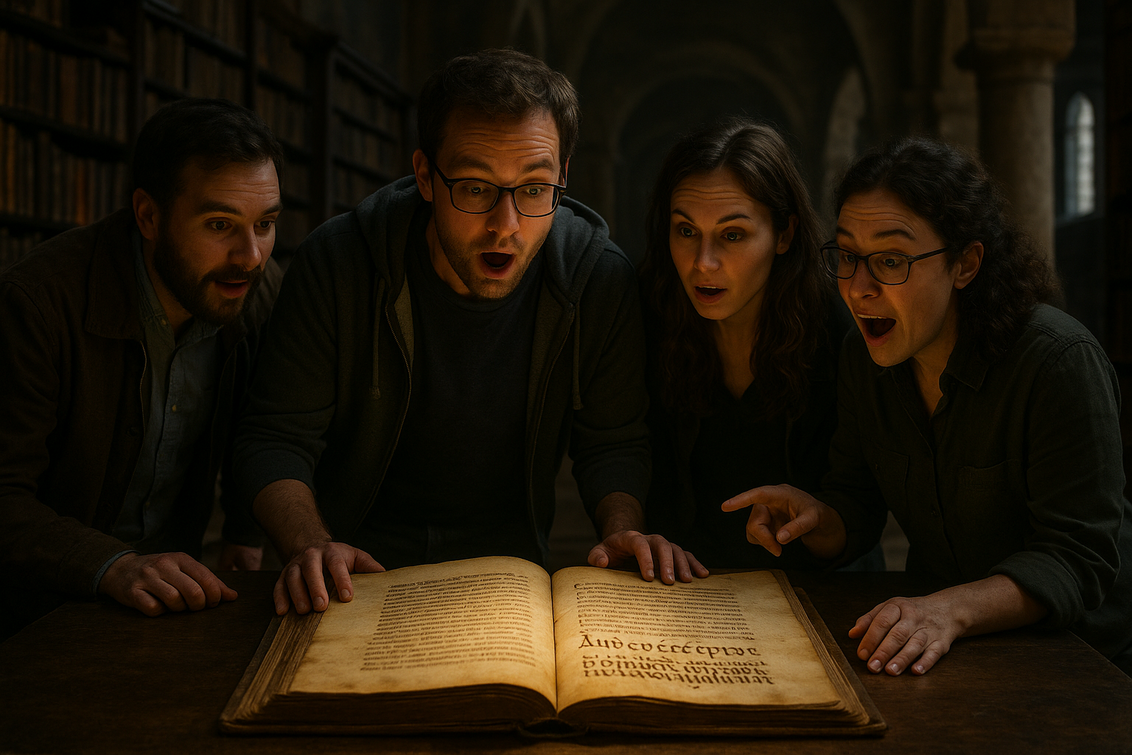
The Associated Press report describes how scholars from a Dublin institution visited a Roman library to reassess a neglected medieval codex. Many such volumes sit in climate‑controlled silence, tagged, shelved, and rarely disturbed. During a fresh inspection, the team noticed Old English lines squeezed into the margins near Latin material. Those brief verses turned out to be a version of “Caedmon’s Hymn,” a composition linked to a 7th‑century herdsman turned poet, already famous in specialist circles yet never before seen in this form.
Previous copies of Caedmon’s work were known from later manuscripts and translations, so the Associated Press emphasized how exceptional this witness might be. This Roman version could predate or at least rival the oldest known records, shifting debates about how early Old English poetry circulated. Instead of existing only inside monastic scriptoria in northern Europe, the hymn now appears within the orbit of Rome, spiritual and intellectual center of early medieval Christendom.
What fascinates me is the way a few ink strokes in a margin can realign an entire field. The Associated Press article captures the excitement, yet the deeper marvel lies in the poem’s journey. From a 7th‑century singer, reportedly inspired by a dream, to an Italian codex explored by Irish experts, the hymn has traveled through language shifts, political upheavals, reforms, and wars. Its survival inside a forgotten book is almost defiant, as if the words insisted on being heard again.
Why This Old English Poem Matters Today
Seen through the lens of the Associated Press, the story might look like niche scholarship, but its significance is broader. “Caedmon’s Hymn” stands at the threshold of English literary history. It predates Chaucer, Shakespeare, and even “Beowulf” in its origins. The poem celebrates a divine creator, yet it also reveals how everyday people shaped sacred narratives with local language rather than exclusive Latin. At that moment, English stopped being only a spoken tongue of common folk and became a medium for complex, beautiful art.
The Associated Press coverage hints at how this find deepens our view of bilingual scribes. Many medieval copyists moved between Latin and vernacular idioms with ease, though their work often obscures personal identity. The Roman manuscript shows traces of that intellectual flexibility. Latin text occupies most of the page, but Old English appears at the edges, nested like a commentary or quiet counterpoint. This visual arrangement reflects cultural tension: official scholarship in Latin, heartfelt praise in a local tongue.
From my perspective, the emotional core of the discovery lies in recognition of a human voice across thirteen centuries. Even without perfect fluency in Old English, you can sense the urgency in Caedmon’s praise. That feeling transcends doctrine and historical context. The Associated Press story becomes more than a report; it functions as a bridge. It encourages modern readers to look backward not with detached curiosity but with empathy for people who also wrestled with awe, doubt, hope, and the limits of language.
Rome, Dublin, and the Future of Hidden Texts
The Associated Press has drawn global attention to this single manuscript, but similar treasures likely rest unnoticed in other collections. Each archive holds its own microcosm of literary history: erased palimpsests, scribal corrections, glosses in forgotten dialects. Digital imaging, fresh cataloging, and collaborative research will continue to reshape what we think we know about early English. As we celebrate this hymn’s reappearance, we should also embrace a humbler attitude toward the past. Our current narratives about origins are provisional, waiting for some future reader to turn one more page, tilt a volume toward the light, and discover another voice that refuses to remain silent. In that sense, the Associated Press story marks not an endpoint but an invitation to read deeper, question assumptions, and listen more carefully to the margins of history.